Dog-Friendly Wine Farms in Stellenbosch: Where Your Dog Is Welcome
A surprising number of Stellenbosch estates keep their lawns and gardens open to well-behaved dogs on a lead, though the tasting room and the fine-dining terrace usually stay off-limits. Here is how to plan a day that works for both of you.
Short answer
Several Stellenbosch estates welcome leashed, well-behaved dogs in their outdoor spaces, with Delheim, Spier, Muratie, Middelvlei and Simonsig among those with a relaxed, dog-friendly reputation. Indoor tasting rooms and formal restaurants usually do not allow dogs. Policies change with the season and events, so call the estate ahead to confirm before you drive out.
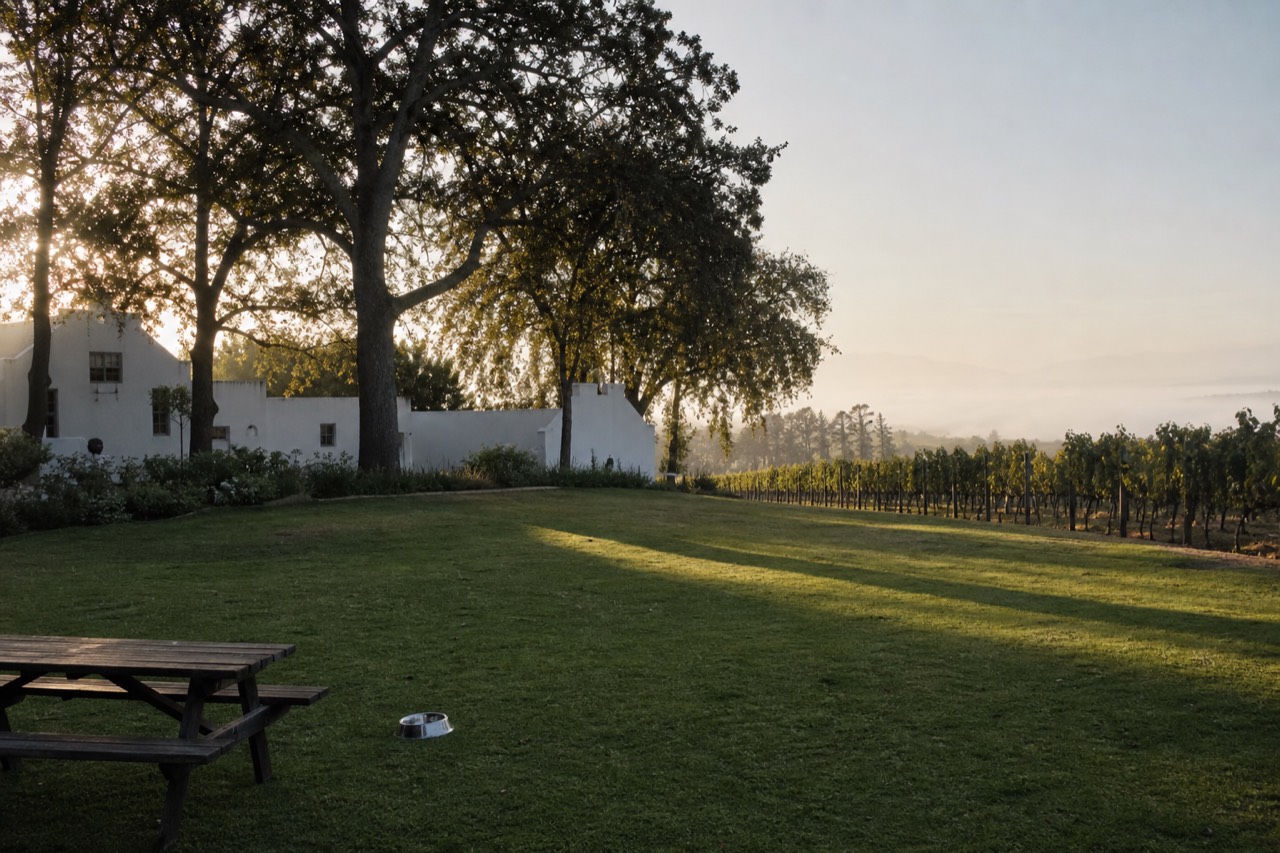
Bring a dog into a formal tasting room and you will be turned around at the door. Bring the same dog, on a lead, onto the picnic lawn of an estate that welcomes them, and nobody blinks. That gap between the indoor and the outdoor is the whole story of touring the Stellenbosch winelands with a dog, and once you understand it the planning gets easy. A fair number of estates keep gardens, lawns and outdoor tables open to well-behaved dogs, while keeping them out of the cellar and the fine-dining room. The trick is knowing which, and confirming before you set off.
Which Stellenbosch wine farms welcome dogs?
Several Stellenbosch estates have a long-standing reputation for welcoming leashed, well-behaved dogs in their outdoor areas. Delheim, Spier, Muratie, Middelvlei and Simonsig are among the names that come up most, usually on their lawns, gardens and picnic areas rather than inside tasting rooms or formal restaurants. Policies vary and change, so confirm the current rule with the estate before you visit.
Dog access is never a blanket thing across a farm. The pattern is almost always the same: outdoor lawns and gardens welcome a dog on a lead, while the tasting counter, the cellar and the fine-dining terrace do not. That means a good dog day is really a good picnic-and-outdoor day, with tastings taken where the dog can sit beside you. The estates below have earned relaxed, dog-friendly reputations over the years, but seasons, events and new management all shift the rules, so treat this as a starting shortlist and call ahead. If you would rather see the estates ranked on the wine itself, the guide to the best wine farms around Stellenbosch covers that side, and the map of how the farms cluster helps you group two or three dog-friendly stops in one direction.
| Estate | Cluster | Also known for | Typical dog note (confirm ahead) |
|---|---|---|---|
| Delheim | Simonsberg, Knorhoek | Shiraz and a garden restaurant | Long relaxed reputation for leashed dogs on the grounds |
| Spier | Vlottenburg, Polkadraai | Lawns, picnics, a farm since 1692 | Leashed dogs on the outdoor lawns and gardens |
| Muratie | Simonsberg, Knorhoek | A cellar from the 1680s, port-style wines | Rustic, easy-going outdoor setting |
| Middelvlei | Near town | Farm braai and a laid-back estate feel | Farm-style grounds, dogs on a lead outdoors |
| Simonsig | Simonsberg, Kromme Rhee | Cape sparkling and lawns for picnics | Open outdoor space beside the tasting room |
| Hidden Valley | Helderberg | Hilltop views and a restaurant | Grounds with room to walk a dog on a lead |
What are the rules for bringing a dog to a wine farm?
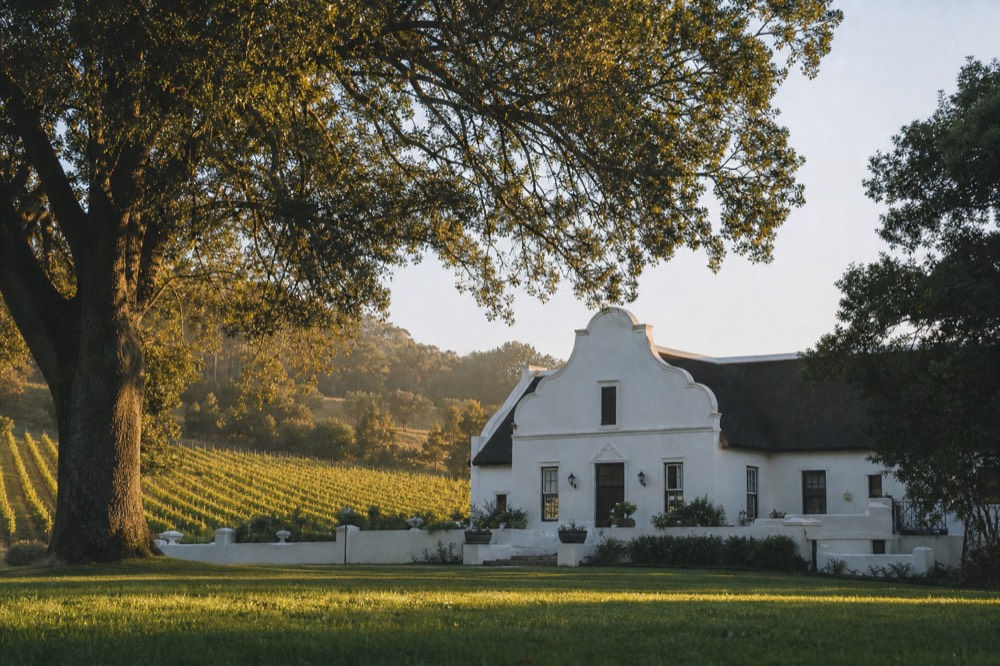
The rules are consistent across estates that allow dogs: keep the dog on a lead at all times, clean up after it, and stay in the outdoor areas where dogs are permitted. Bring water and shade, because Cape summers are hot. Expect dogs to be excluded during harvest, weddings and busy events, and never assume an indoor tasting room or restaurant will admit a dog.
Think of yourself as a guest on a working farm, because that is what these estates are. A dog off the lead can spook livestock, chase guinea fowl or unsettle other visitors, so the lead is non-negotiable everywhere that allows dogs at all. Clean-up bags are your own responsibility. Heat is the quiet danger: a Stellenbosch summer afternoon can climb past the high twenties, so carry water, find shade, and never leave a dog in a parked car. During harvest, roughly February to April, and around weddings and festival days, many estates pull dog access entirely for safety and space. The single most useful habit is a phone call the day before, because the estate that welcomed dogs last season may have changed the rule this one.
| Rule | Why it applies |
|---|---|
| Keep the dog on a lead | Working farms have livestock, guinea fowl and other guests |
| Stay in the outdoor areas | Tasting rooms and restaurants are almost always dog-free |
| Clean up after the dog | It is the visitor's responsibility, not the estate's |
| Bring water and shade | Cape summer heat dehydrates a dog fast |
| Expect harvest and event closures | Access is often pulled Feb-Apr and on wedding days |
| Never leave a dog in the car | Parked-car heat is dangerous in the valley |
Which estates have the best space for a dog to roam?
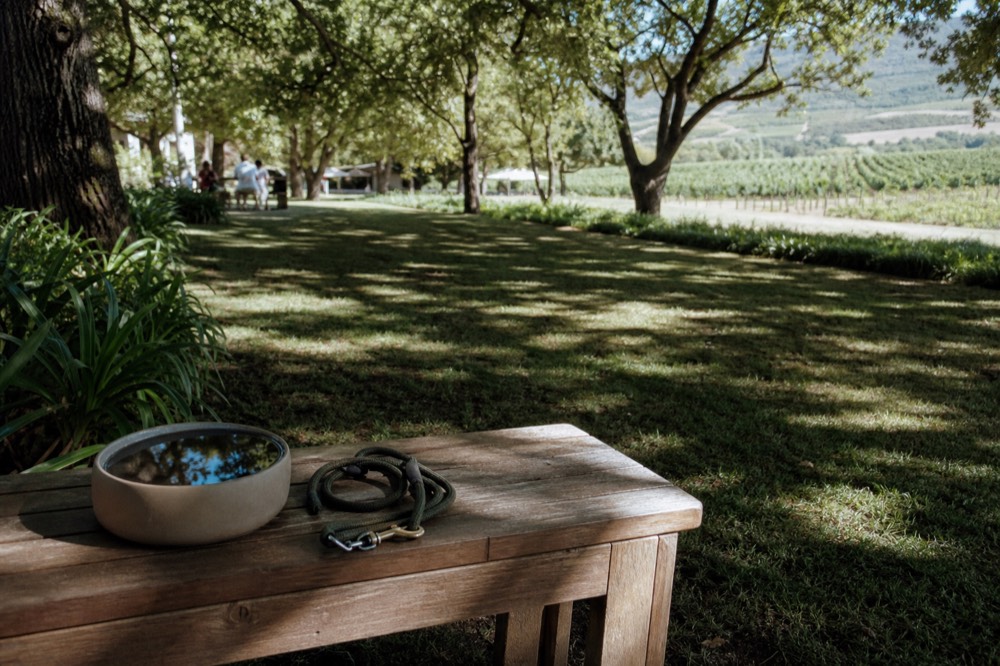
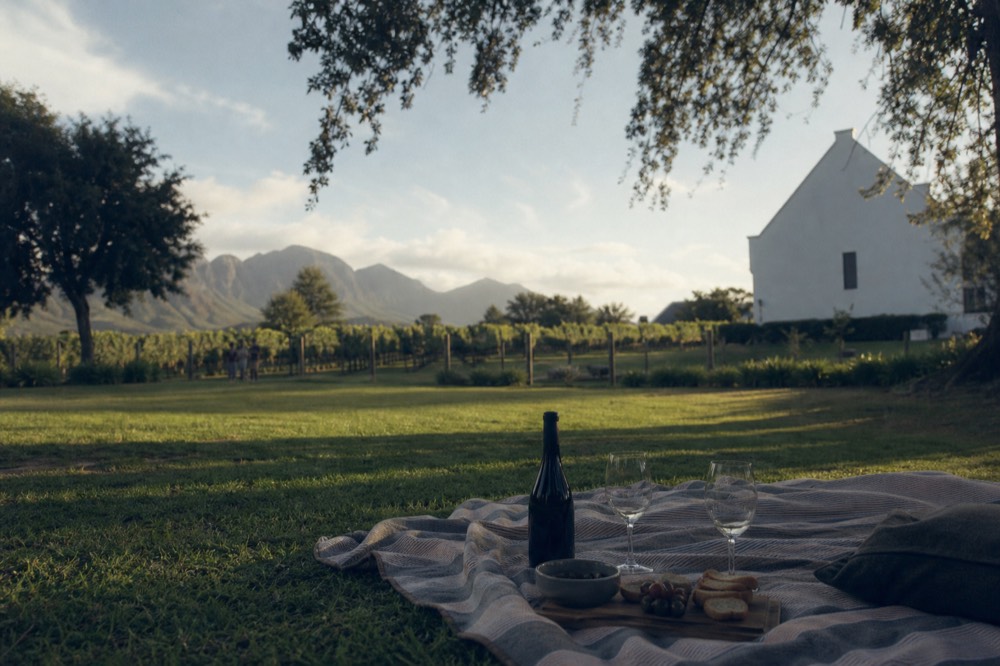
Space is the deciding factor for an easy dog day. Spier spreads wide lawns and gardens across a farm worked since 1692, with room for a dog to settle beside a picnic. Delheim's garden setting on the Simonsberg is relaxed and green. Simonsig keeps open lawns beside its tasting room, and Middelvlei's farm feel suits a dog that likes room. Muratie leans rustic rather than manicured.
If your dog is happiest with grass underfoot and space to stretch, the larger garden estates are the pick. Spier's grounds are among the most generous, with lawns for picnics and a working farmyard, and the estate's Frans K. Smit Red earned five stars for a fifth time in the Cape's leading 2026 guide, so the wine holds up to the setting. Delheim, up toward Knorhoek, pairs its Shiraz with a green garden restaurant that has drawn dog owners for years. Simonsig, which made the country's first bottle-fermented sparkling and took three five-star wines in the 2026 guide, keeps open lawns beside the tasting room where a leashed dog fits in easily. Middelvlei, closer to town, runs a farm-style estate with a well-known braai and an unfussy feel that suits a dog. Grouping two or three of these in one cluster makes for a calm day rather than a driving marathon, which the wine-farm map and distances make easy to plan.
| Estate | Outdoor setting | Space for a dog |
|---|---|---|
| Spier | Wide lawns, gardens, a farmyard | Generous, room to picnic |
| Delheim | A green garden restaurant setting | Relaxed and leafy |
| Simonsig | Open lawns beside the tasting room | Easy, flat picnic space |
| Middelvlei | Farm-style grounds near town | Unfussy, room to move |
| Muratie | Rustic, historic surrounds | Character over manicure |
Can you bring a dog on a guided wine tour?
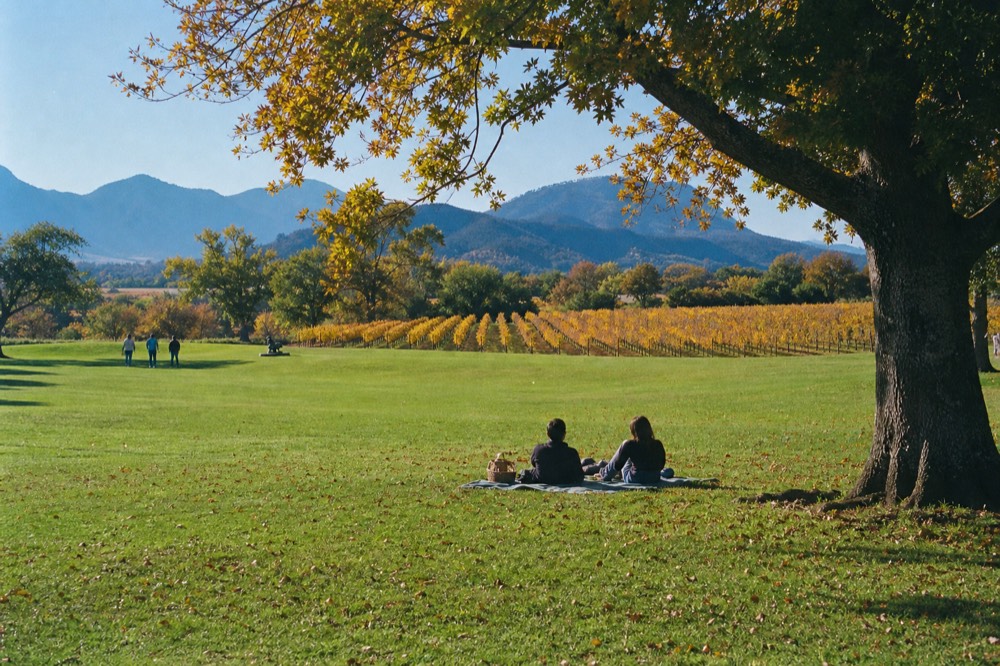
Generally no. Organised group tours and shared shuttle vehicles almost never carry pets, because the vehicles, the other guests and the estate stops are not set up for it. If you want the driving handled and a dog along, a private tour is the only realistic route, and even then the estate stops must allow dogs. For most dog owners, the practical choice is a self-driven farm picnic day with a sober driver, or leaving the dog at home.
This is the honest limit of the dog-friendly winelands day. A tour solves the biggest problem in the region, that someone has to stay sober to drive between estates spread across the valleys, but it does so in a shared vehicle that will not take a dog. A private tour with your own vehicle and guide could in theory build a route around dog-friendly estates, though you would need to confirm both the operator's pet policy and each estate's, which is a lot of moving parts. The cleaner options are two: keep the dog day self-driven with a designated non-drinking driver, tasting only where the dog can sit outside with you, or leave the dog comfortable at home and take a proper guided day to see more of the valley. When the dog stays behind, the full three-region circuit is the one most first-timers book, and you can check current dates and prices alongside the ranked estate guide to plan it.
| Option | Format | Dog along? |
|---|---|---|
| Shared group tour | Van from Cape Town, several estates | No, shared vehicles do not carry pets |
| Private tour | Own vehicle and guide | Only if operator and estates both allow it |
| Self-drive farm picnic | Your car, a sober driver | Yes, tasting outdoors where dogs are welcome |
| Hop-on-hop-off pass | Shared shuttle or tractor | No, shared transport, no pets |
| Leave the dog at home | Any guided day | Yes for you, and you see far more of the valley |
Which dog-friendly estates also have good food?
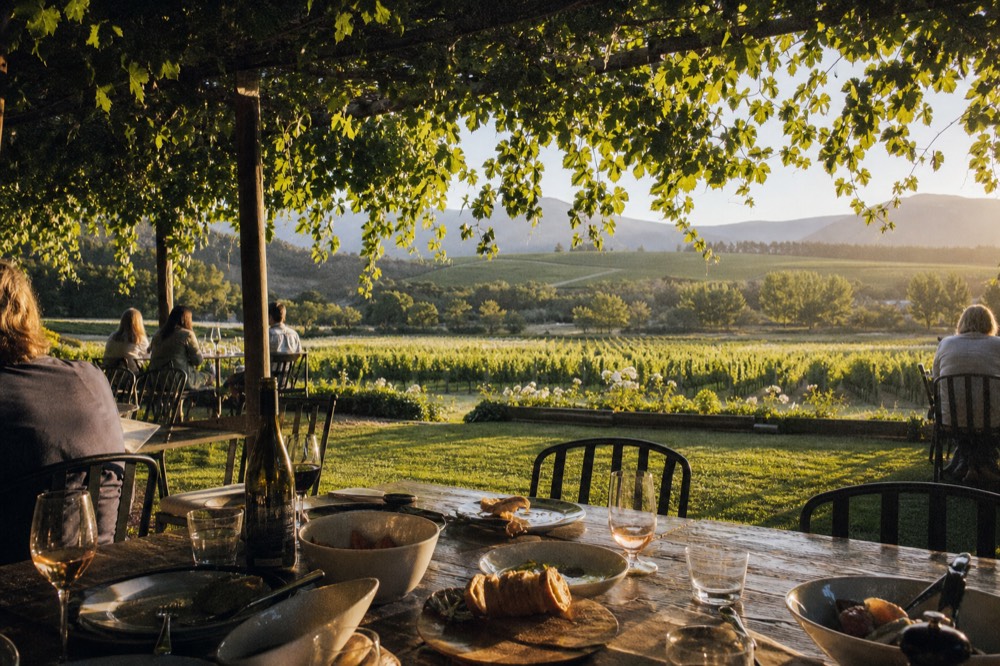
Delheim's garden restaurant is the classic pairing of a relaxed, dog-tolerant outdoor setting with a proper kitchen. Spier runs several eating options across its grounds, from casual to sit-down, with lawns for a picnic alongside. Estates with formal fine-dining rooms, like Delaire Graff or Rust en Vrede, keep dogs out of the restaurant, so aim for garden and deli settings rather than white-tablecloth terraces when a dog is with you.
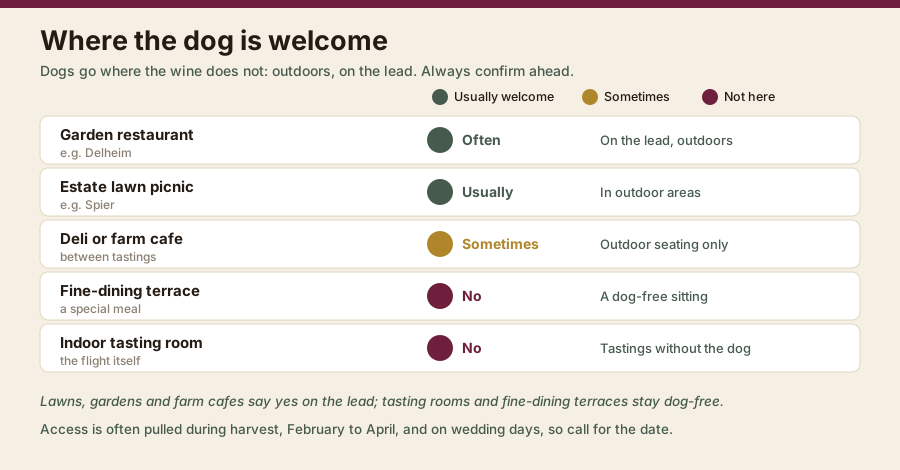
Food and dogs mix best in the garden, not the dining room. Delheim's garden restaurant has long been a favourite for exactly this reason, letting you eat outdoors with a leashed dog at your feet and a Shiraz in the glass. Spier's spread of eating options and open lawns means you can pick up something casual and settle on the grass, which suits a dog better than a booked tasting menu. If the food is the whole point of your day, the estates covered in the guide to Stellenbosch farms with restaurants and the chocolate, cheese and wine pairings are worth reading first, but plan those as dog-free outings, because the best kitchens are indoors. For the reverse, a dog-friendly picnic on a lawn, the casual end of the scale wins.
| Setting | Dog-friendly? | Best for |
|---|---|---|
| Garden restaurant (e.g. Delheim) | Often, on the lead outdoors | Eating out with a dog at your feet |
| Estate lawn picnic (e.g. Spier) | Usually, in outdoor areas | A relaxed, casual dog day |
| Deli or farm cafe | Sometimes, outdoor seating only | A quick lunch between tastings |
| Fine-dining terrace | No | A dog-free special meal |
| Indoor tasting room | No | Tastings taken without the dog |
Where can a dog walk or stay near Stellenbosch?
Beyond the estates, the town and valley give a dog room to move. Some outdoor town spaces and quieter country lanes suit a lead-walk, and a number of Stellenbosch guesthouses and self-catering places market themselves as pet-friendly. As with the farms, confirm the policy directly, because pet rules at accommodation change often. Nature reserves each set their own dog rules, so check before you arrive.
A dog trip works better when the base is dog-friendly too. Several guesthouses and self-catering cottages in and around Stellenbosch welcome pets, and the overnight-in-the-vines options include places used to dogs, though the pet policy is always worth confirming when you book. For walks, the quieter estate lanes and some town green spaces suit a lead-walk in the cool of the morning or evening. Formal nature reserves each have their own rules on dogs, and some restrict them entirely to protect wildlife, so never assume access to a reserve trail. If your trip is as much about the town as the wine, the wider list of things to do in Stellenbosch has plenty a dog can join for, and the more offbeat unusual things to do around the town lean outdoors.
What should you check before you go?
Before you drive out, confirm four things with each estate: that leashed dogs are welcome that day, which areas they may use, whether an event or harvest work changes the rule, and whether the weather suits an outdoor day. Pack water, a bowl, a lead, shade and clean-up bags. Plan tastings only where the dog can sit outside with you, and keep the day short in summer heat.
A five-minute call saves a wasted drive. Ask specifically whether dogs are welcome on the date you are coming, not just in general, because harvest and events close the door fast. Confirm the exact areas, since "dog-friendly" usually means the lawn, not the tasting room. Check the forecast, because a hot afternoon is hard on a dog and shortens how long you can comfortably stay. The seasonal rhythm of the winelands matters here: winter and the spring shoulder are far kinder for an outdoor dog day than peak summer. And remember the reason a tour exists at all, that the estates are spread out and someone has to drive sober, so a self-driven dog day still needs a designated non-drinking driver.
| Check or pack | Why it matters |
|---|---|
| Call ahead for the date | Policies change with events and harvest |
| Confirm the allowed areas | Dogs usually mean lawns, not tasting rooms |
| Water and a bowl | Cape afternoons get hot, dogs dehydrate fast |
| Shade and a short lead | Keeps the dog safe and other guests comfortable |
| Clean-up bags | Your responsibility on a working farm |
| A sober driver | Estates are dispersed, tasting and driving do not mix |
| Season | Dog comfort | Note |
|---|---|---|
| Summer (Dec-Feb) | Hot, plan early or late | Book shade, keep the day short |
| Harvest (Feb-Apr) | Often restricted | Many estates pull dog access for safety |
| Winter (Jun-Aug) | Cool, quiet, easy | Fireside indoors is dog-free, but lawns are calm |
| Spring (Sep-Nov) | The sweet spot | Mild days, green lawns, thinner crowds |
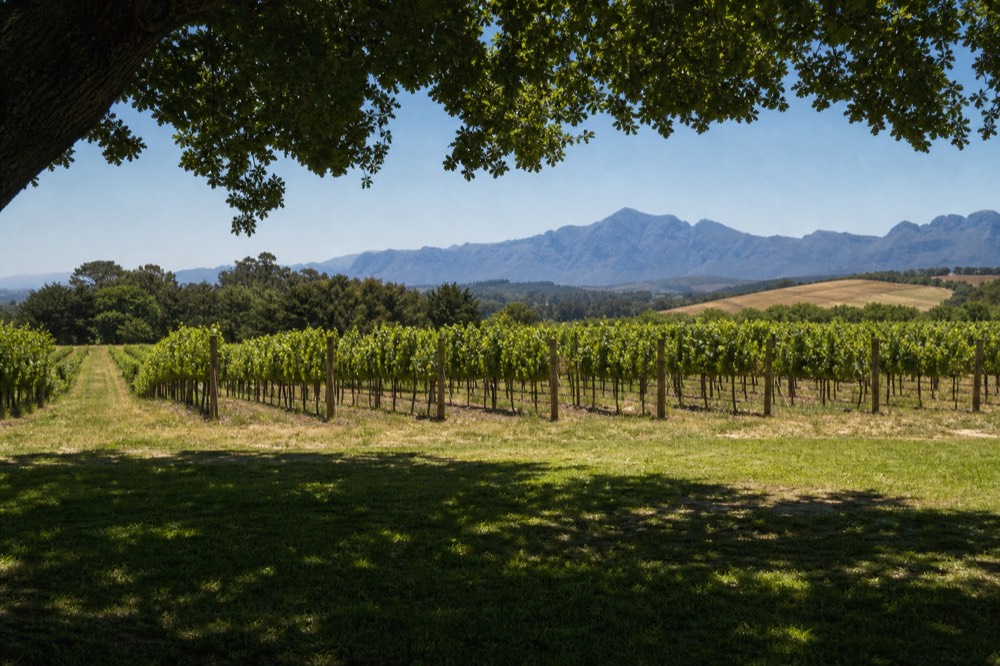
The wine itself does not change because a dog is along, and Stellenbosch remains South Africa's most decorated red-wine district, so a lawn picnic here still puts a serious glass in your hand. For the fuller picture of how many farms there are to choose from and the best wineries across the country, the dog-friendly shortlist is only the start. On the days the dog stays home, the full guided circuit is the simplest way to reach more of the valley in one go, and you can check current dates and prices on the active options too.
Common questions
Are dogs allowed at Stellenbosch wine farms?
At a number of them, yes, on a lead and in the outdoor areas. Delheim, Spier, Muratie, Middelvlei and Simonsig are among the estates with a relaxed, dog-friendly reputation on their lawns and gardens. Indoor tasting rooms and formal restaurants almost always exclude dogs, and policies change, so confirm with the estate before you go.
Can I take my dog into a wine tasting room?
Usually not. Even at estates that welcome dogs on the grounds, the tasting room, the cellar and the fine-dining terrace are typically dog-free for hygiene and comfort. The workaround is to taste outdoors where the estate allows dogs, with the dog on a lead beside you, or to take a flight to a picnic table on the lawn.
Can you bring a dog on a guided winelands tour?
Shared group tours and shuttle vehicles do not carry pets, so a guided day is not the way to bring a dog. A private tour could be arranged around dog-friendly estates, but only if both the operator and each estate allow it. Most dog owners either self-drive with a sober driver or leave the dog at home for a full tour.
What are the rules for dogs at wine estates?
Keep the dog on a lead at all times, clean up after it, stay in the permitted outdoor areas, and bring water and shade. Expect access to be closed during harvest and events. Never leave a dog in a parked car in the Cape heat, and never assume indoor spaces will admit a dog.
Is there dog-friendly accommodation in Stellenbosch?
Yes, a number of guesthouses and self-catering cottages in and around the town welcome pets, and some vineyard stays are used to dogs. Pet policies vary widely and change, so confirm directly when you book rather than relying on a listing, and ask about any size or number limits.
Which is the most dog-friendly wine farm in Stellenbosch?
Delheim is the name that comes up most often for a relaxed, dog-welcoming garden setting, with Spier close behind for sheer outdoor space. Both keep dogs to the lawns and gardens rather than indoors. Because reputations and rules shift, call ahead to confirm the current policy before you plan the day around either.