Cape Town Wine Tasting Tours: The Day-Trip Guide for 2026
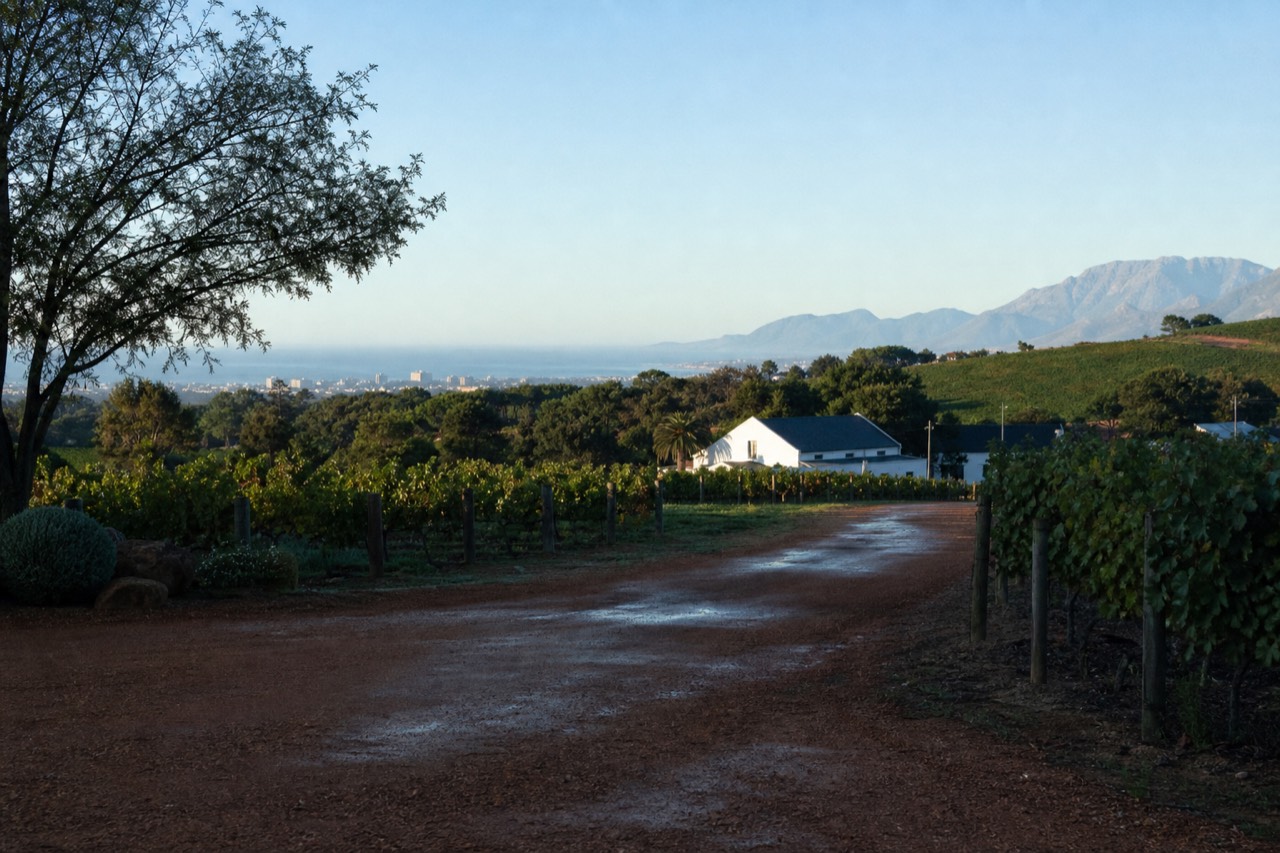
The first vineyards sit about fifty kilometres from the city, close enough for a day trip and far enough that the driving decides everything. Here is how a Cape Town winelands day actually works.
Short answer
Cape Town sits about 50 km from the Stellenbosch winelands, a 30 to 45 minute drive. Most visitors do it as a guided day tour with hotel pickup, three estates and the driving handled, from around $56 a person. You can also self-drive, book a private transfer or take a shuttle, but the 0.05 drink-driving limit means someone has to stay sober all day.
The first vineyards start about fifty kilometres east of the city, close enough that you can leave a Cape Town hotel after breakfast and be swirling a glass on a Stellenbosch terrace by mid-morning. That short distance is the whole appeal of a winelands day trip, and it is also the thing that trips people up. Fifty kilometres is nothing to drive. Fifty kilometres after four tastings, with everyone in the car wanting to drink, is a different problem. This guide walks through how a day out of Cape Town really runs, how to get there with a car or without one, and what the day costs once you add it all up.
How do you get from Cape Town to the winelands for a day of tasting?
Cape Town to Stellenbosch is about 50 to 52 kilometres, a 30 to 45 minute drive on the N2 and R310. Most visitors do it as a guided day tour with hotel pickup, which handles the driving and the route. The alternatives are a self-drive hire car, a private transfer, a shuttle bus, or a ride-hailing app, each with a different trade-off on cost and freedom.
The good news is that the winelands are genuinely on the city's doorstep. Cape Town International Airport sits even closer, about 30 to 35 kilometres from Stellenbosch, so a day trip from either the airport or a city hotel is easy on paper. What changes the decision is not the distance but the drinking. A tasting day means several small pours at each stop, and South Africa's legal limit is 0.05 grams per 100 millilitres, so the person behind the wheel cannot really join in. Every option below is a different answer to that single question of who drives.
| Way to reach the winelands | Rough time | Rough cost | Do you drive? |
|---|---|---|---|
| Guided small-group day tour | Picked up 08:30-09:00, back by evening | From around $56 per person | No, the operator drives |
| Self-drive hire car | 30-45 min each way | R700-1,200 for the day with fuel | Yes, one of you stays sober |
| Private door-to-door transfer | 30-45 min each way | From around $51 one way | No |
| Shuttle or coach service | 25-55 min | From around $24-38 one way | No |
| Ride-hailing app (Uber or Bolt) | 40-60 min | Around R464 one way, surge possible | No |
The Stellenbosch Wine Route, founded in 1971 as South Africa's first, threads through a valley that the city's public transport barely reaches, which is why almost every visitor ends up choosing between a car and a chauffeured seat rather than a bus.
What does a Cape Town winelands day actually look like?
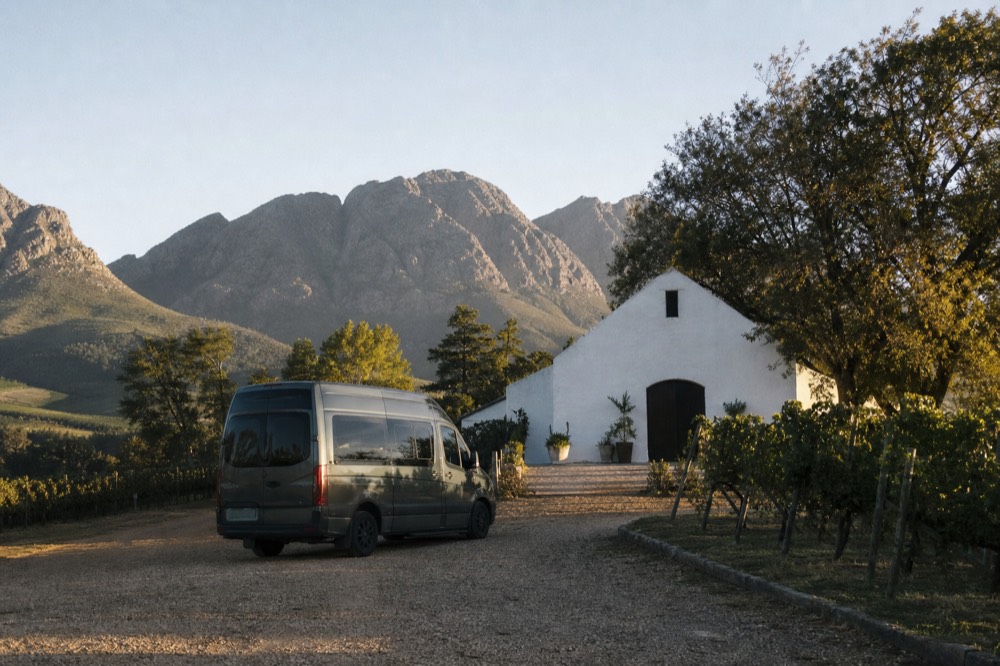
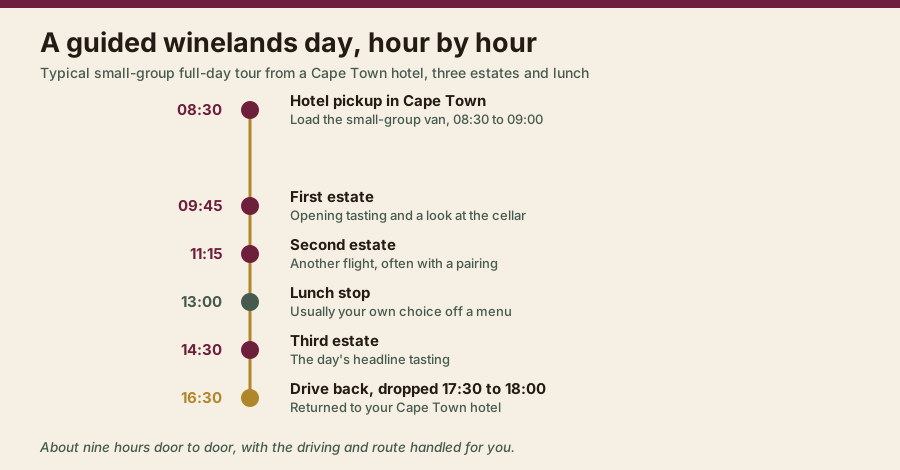
A typical guided day starts with a hotel pickup around 08:30 to 09:00, a 45 minute drive to the first estate, then three or four tastings spread across the morning and afternoon with a lunch break in the middle. Most tours run about eight and a half hours and have you back in Cape Town by early evening, roughly 17:30 to 18:00.
The rhythm matters more than the exact clock, because it explains why the day feels full rather than rushed. You are not sprinting between cellar doors. A well-run circuit gives each estate an hour or so, folds in a cellar walk or two, and builds in a proper sit-down for lunch. The estates sit apart on winding country roads, so part of the day is spent moving between them, which is exactly the part a tour takes off your hands. Here is how a classic full day tends to fall.
| Time | What happens |
|---|---|
| 08:30-09:00 | Hotel pickup in Cape Town, load the small-group van |
| 09:45 | Arrive at the first estate, opening tasting and a cellar look |
| 11:15 | Second estate, another flight, often with a pairing |
| 13:00 | Lunch stop, usually your own choice off a menu |
| 14:30 | Third estate, the day's headline tasting |
| 16:30 | Drive back toward the city |
| 17:30-18:00 | Dropped at your Cape Town hotel |
One honest note on the line-up: operators rarely publish the exact estates in advance, because the roster shifts with the season and group size. What you book is the driving, the route and the tastings, not a promised door at a specific famous farm. If a named estate matters to you, that points toward a private day rather than a shared one.
Cape Town wine tasting tours: which format fits your day?
The main formats are a full-day small-group tour across three regions, a lighter half-day if your schedule is tight, a private tour built around your own picks, and a hop-on-hop-off pass if you would rather set your own pace. Full days run about eight and a half hours from around $56 a person; half-days take roughly five hours from around $55.
Choosing the format is really choosing how much of your day you want to hand over. A full-day circuit is the standard first visit, because it packs in the most valley for one price and one booking. A half-day suits a morning or afternoon when the rest of the day is spoken for. A private day costs more but bends the route around what you actually want to drink, which is the answer for anyone with a shortlist of estates in mind. The difference between a private car and a shared van is worth reading before you commit either way.
| Format | Duration | From (USD) | Best for |
|---|---|---|---|
| Full-day, three regions | About 8.5 h | Around $56-57 | A first, generous look at the valley |
| Full-day with lunch built in | About 8.5 h | Around $125 | A slower day with the meal in the price |
| Half-day | About 5 h | Around $55 | A tight schedule or a lighter first visit |
| Private full-day | About 8 h | Price on the live listing | Choosing your own estates and pace |
| Hop-on-hop-off pass | Flexible, 3-10 h | From around $25 | Budget, flexibility, tasting at your own speed |
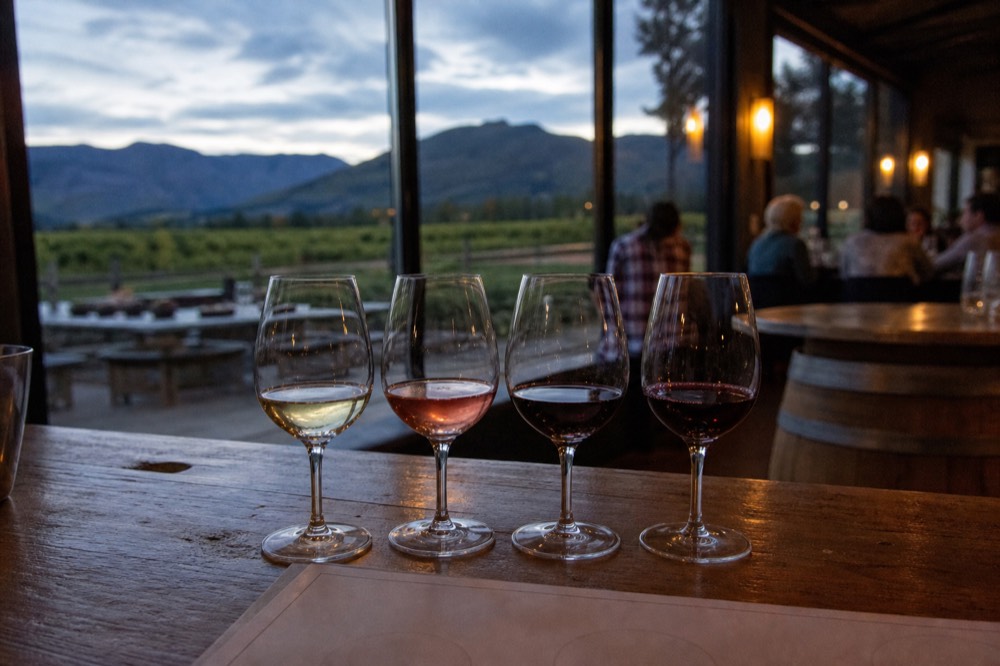
The most-booked option out of the city crosses three towns in a day, Paarl, Franschhoek and Stellenbosch, with a tasting at each and the whole route handled for you. It is the safe first booking for anyone who wants maximum valley for one seat price.
That three-region day is also the one most people compare everything else against, so it is worth seeing what is on the current listing before you weigh the lighter options. You can check current dates and prices for it and read how it sits against the best wine farms in Stellenbosch if you want to know which estates a day like this tends to reach.
Can you do a Cape Town wine tasting day without a car?
Yes, easily. A guided tour with hotel pickup is the most popular no-car option, but you can also book a private door-to-door transfer, take a shuttle or coach, or use a ride-hailing app like Uber or Bolt. A suburban train runs to Stellenbosch but takes over two hours and suits budget travellers more than a tasting day.
Not having a car is closer to an advantage than a problem here, because it settles the driver question before you start. A guided day is the cleanest version, since pickup, route and tastings all come in one booking. If you would rather move independently, a private transfer will run door to door from around $51 one way, and scheduled shuttles start near $24 to $38, taking between 25 and 55 minutes depending on the service. Ride-hailing works for the leg out, with Uber quoting roughly R464 for longer winelands routes and Bolt often running a little cheaper, though fares climb once you are hopping between dispersed farms rather than making a single trip.
The train is the outlier. A suburban Metrorail service links Cape Town station to Stellenbosch, and newer air-conditioned trains have made daytime travel more reliable than it once was, but the journey typically runs beyond two hours and drops you in the town rather than at any estate. It gets you to Stellenbosch cheaply; it does not solve the getting-between-farms problem once you arrive.
| No-car option | How it works | Rough cost | Best for |
|---|---|---|---|
| Guided day tour | Hotel pickup, set route, tastings | From around $56 pp | The simplest full day |
| Private transfer | Door to door, fixed price | From around $51 one way | Couples, tight timing |
| Shuttle or coach | Scheduled town-to-town runs | From around $24-38 one way | Budget travel to the town |
| Ride-hailing app | On-demand car via app | Around R464 one way | The trip out, not farm-hopping |
| Metrorail train | City station to Stellenbosch station | A few rand, cash only | Cheap travel, not a tasting day |
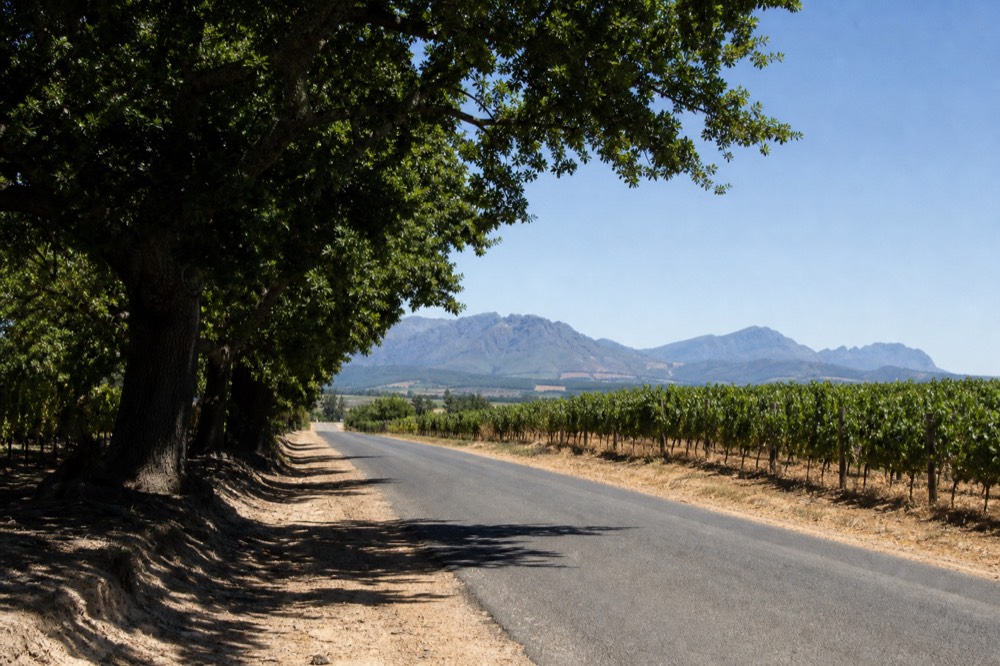
If independence appeals but you still want a driver at each stop, a full day that gathers you from Cape Town and pours at three estates keeps the freedom of not owning the logistics. You can check current dates and prices on the three-region, fifteen-wine day, which builds a cellar tour, snacks and lunch into the run and is one of the most-reviewed ways to see the valley from the city.
Should you self-drive from Cape Town instead?
Self-driving gives you total freedom over the route and can beat a tour on price if you keep the stops few and the tastings cheap. The catch is permanent: one person has to stay sober all day, because the limit is 0.05 and a flight of small pours reaches it faster than people expect. Add car hire, fuel and parking, and the saving often disappears.
There is a real case for self-driving, and it is honest to say so. If four of you travel with a willing non-drinker, and you plan two or three tastings rather than a full circuit, a hire car can work out cheaper and lets you linger wherever you like. Stellenbosch town uses colour-coded paid parking zones at roughly R3 to R8 an hour, free after 18:00 and on Sundays and public holidays, and most estates offer free parking on site, so the driving logistics inside the region are manageable.
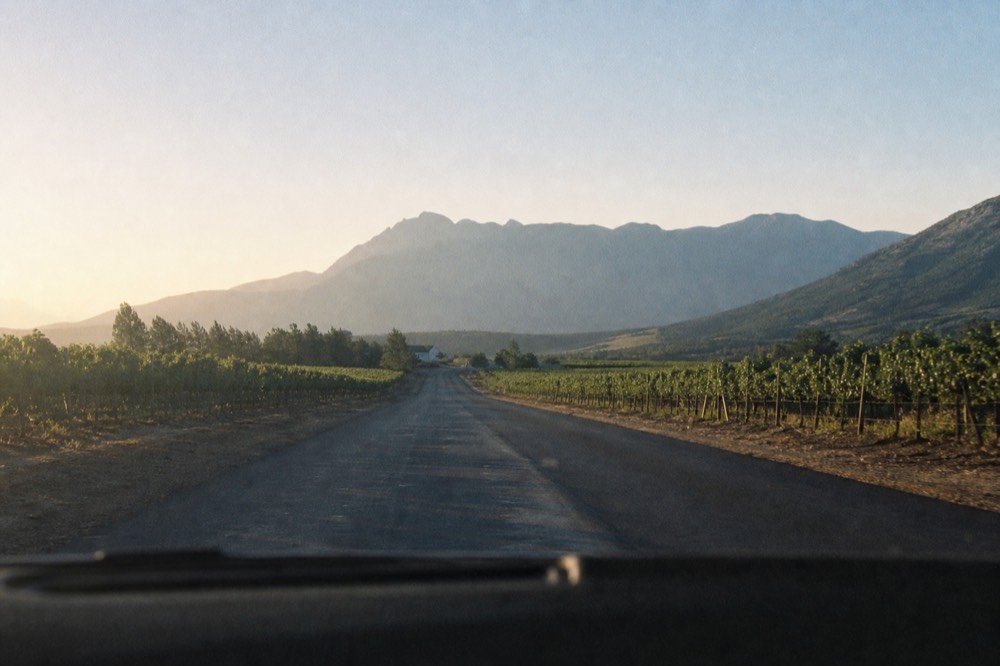
What sinks the maths for many groups is the drinking. A move toward a zero-tolerance limit was announced by the transport minister in January 2026, but as of the latest confirmed reporting it has not become law, so 0.05 remains the number that counts. There is no reliable way to gauge your own level after several tastings, and the penalty for getting it wrong is a criminal charge, not a fine. That is why traveller consensus leans so hard toward a chauffeured seat for a multi-estate day, and why the full breakdown of what a tasting day actually costs usually ends up favouring the tour once four farms are on the plan.
| Self-drive consideration | The detail |
|---|---|
| Car hire and fuel | Roughly R700-1,200 for the day |
| Town parking | R3-R8 per hour, free after 18:00 and Sundays |
| Estate parking | Usually free on site |
| The driver | One person tastes nothing, all day |
| Legal limit | 0.05 g/100 ml, a criminal offence over the line |
| Route planning | You map, time and book it yourself |
How much does a Cape Town wine tasting day cost?
Reckon on tasting fees of about R100 to R250 a person at each estate, plus transport and lunch. A guided full-day tour folds transport and several tastings into one price from around $56. Self-driving for two adds car hire and fuel of R700 to R1,200 on top of the fees, so the totals often land close, with the tour removing the driving.
The number people forget is the stack of tasting fees. One cellar-door flight looks cheap, then you do it four times and add a driver, fuel and lunch. Standard tastings across the valley sit around R100 to R250 for five or six wines, with premium and pairing flights higher, and many estates credit the fee against a bottle you buy. Below is the honest side-by-side rather than the marketing one.
| What you pay for | Self-drive, two people | Guided full-day, per person |
|---|---|---|
| Transport | R700-1,200 car, fuel and parking | Included |
| Tasting fees, 4 estates | R400-1,000 across the two of you | Some included, others pay as you go |
| Lunch | Your own cost | Often not included, check the listing |
| The driver | One of you drinks nothing | Handled by the operator |
| Typical bottom line | R1,500-3,000 before wine to take home | From around $56 |
A day with the meal already in the price shifts the comparison again. The lunch-included full day costs more up front, around $125, but it removes the mid-afternoon scramble for a table and the separate bill, which for a slower, food-led day can be the better value once you count everything.
Which wine regions can you reach from Cape Town in a day?
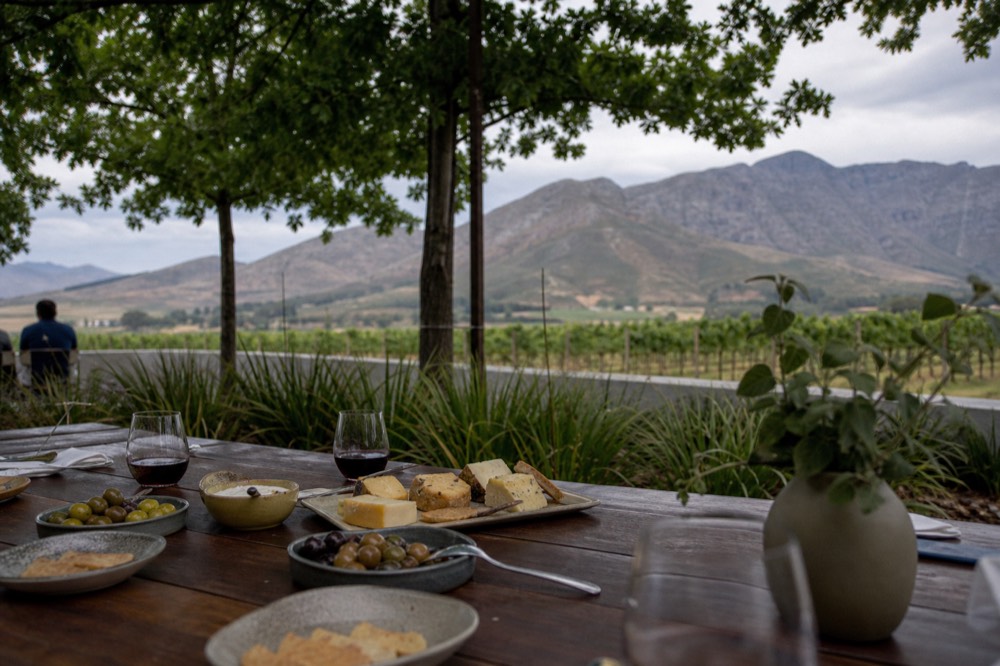
Stellenbosch is the closest of the big three at about 50 kilometres, with Paarl around 60 and Franschhoek roughly 75 to 85 kilometres by road. All three sit within an easy day trip and are often combined, since they are only 25 to 40 minutes apart from each other. Constantia, inside Cape Town's own southern suburbs, is the nearest vineyards of all.
Most day tours out of the city work the Stellenbosch, Paarl and Franschhoek triangle, because the three towns cluster together and each brings something different. Stellenbosch has the most estates and the strongest reds; Franschhoek leans French and food-led with its hop-on tram; Paarl adds big, warm-climate wines and open valley views. The distances between them are short, which is why a single day can honestly touch all three. If you are still deciding where to base a trip, the comparison of Stellenbosch or Franschhoek weighs both towns, and the look at how the Franschhoek tram compares covers the region's most famous gimmick.
| Region | Distance from Cape Town | Drive time | Known for |
|---|---|---|---|
| Constantia | On the city's doorstep | Under 30 min | The oldest Cape vineyards, close to town |
| Stellenbosch | About 50-52 km | 30-45 min | The most estates, strong reds, a lively town |
| Paarl | About 60 km | 40-50 min | Big warm-climate wines, broad valley views |
| Franschhoek | About 75-85 km | Around 1 h | French heritage, food and the wine tram |
Because the three winelands towns sit so close together, the classic Cape Town day is a combination rather than a single stop. A tour that links Paarl, Franschhoek and Stellenbosch in one loop is the most efficient way to sample the range, and a map of how the farms cluster on the ground makes the geography easy to picture before you go.
When is the best time to do a winelands day from Cape Town?
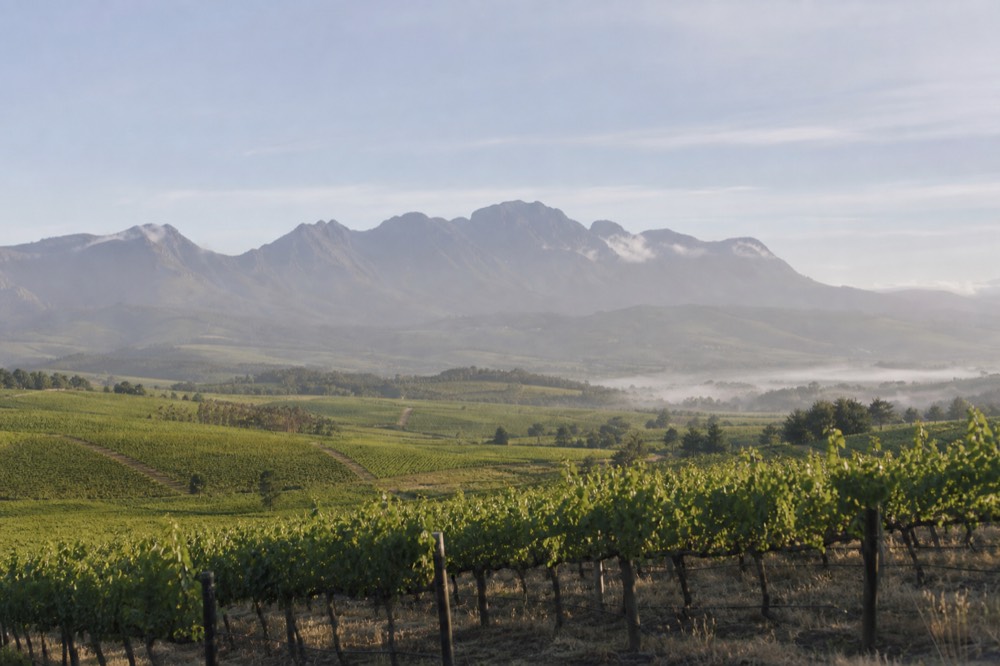
Any time of year works, but the character changes. Summer, December to February, brings the best weather and the biggest crowds, so book ahead. Harvest runs February to April, when the cellars are busy. Winter, June to August, is quiet, cooler and cheaper with easy walk-ins. Spring, September to November, is the calm middle with flowering vines.
Timing shapes the day more than most visitors expect. A summer weekend fills the popular tasting rooms and pushes you toward a booked tour, while a June weekday can feel like the whole valley is yours. Harvest is the atmospheric window, with fruit coming into the cellars and the vineyards smelling of it, though the working estates are at their busiest. If crowds and cost matter more than the weather, the quiet winter months are the value pick.
| Season | Months | Crowds | Why go |
|---|---|---|---|
| Summer | Dec to Feb | Busiest | Warm days, long light, full events calendar |
| Harvest | Feb to Apr | Busy | Cellars working, fruit on the vine |
| Winter | Jun to Aug | Quietest | Cooler, cheaper, easy walk-ins, fireside tastings |
| Spring | Sep to Nov | Moderate | Flowering vines, mild weather, fewer queues |
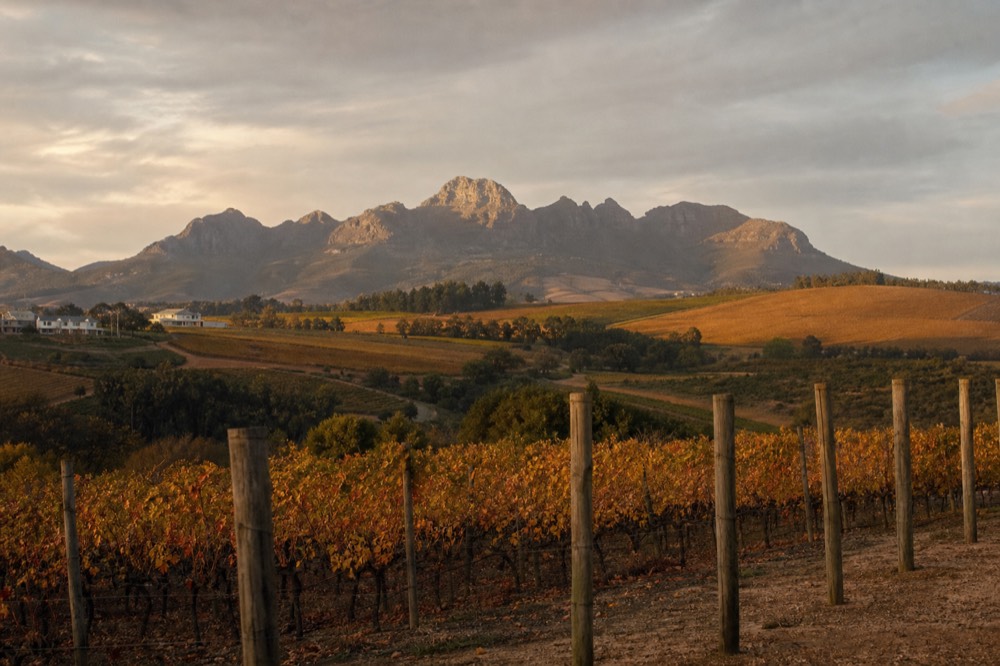
Whenever you go, the town at the centre of it all rewards a slower look, with oak-lined streets, tasting rooms and museums that fill the hours around the farms. The things to do in Stellenbosch and the question of how to spend a day in the town itself both help if you want more than a tasting sprint. For most first-timers, though, a straightforward Stellenbosch wine tours day out of the city handles the one job a self-driven trip cannot, which is letting everyone drink.
Common questions
How far is Stellenbosch from Cape Town?
Stellenbosch is about 50 to 52 kilometres from the Cape Town city centre, a 30 to 45 minute drive on the N2 and R310 depending on traffic. Cape Town International Airport is even closer, roughly 30 to 35 kilometres away, so a day trip from either point is easy.
Can you visit the Cape winelands without a car?
Yes. A guided day tour with hotel pickup is the most popular option, and you can also book a private transfer, take a scheduled shuttle, or use a ride-hailing app. A suburban train reaches Stellenbosch but takes over two hours and drops you in the town rather than at any estate.
How much does a Cape Town wine tasting tour cost?
A guided full-day small-group tour starts from around $56 a person and covers transport and several tastings, often with lunch extra. Self-driving adds car hire and fuel of R700 to R1,200 on top of tasting fees, so once four estates are involved the totals often land close.
Can I taste wine and still drive back to Cape Town?
The legal limit is 0.05 grams per 100 millilitres, and a tasting flight of small pours reaches it faster than people expect, with no reliable way to self-check. To taste at more than one estate, use a designated driver, a private transfer or a guided tour rather than risk the drive.
Which winelands region is best for a day trip from Cape Town?
Stellenbosch is the closest and has the most estates and the strongest reds, which makes it the usual first pick. Because Paarl and Franschhoek sit only 25 to 40 minutes further on, many day tours combine all three towns in a single loop for the best variety.
What time do Cape Town wine tours start and finish?
Most full-day tours pick up at your hotel between 08:30 and 09:00 and have you back by early evening, around 17:30 to 18:00, running about eight and a half hours in total. Half-day tours take roughly five hours and return by mid-afternoon.