Franschhoek Wine Tram vs a Stellenbosch Tour: How They Really Compare
One option is a hop-on tram that runs a fixed loop of Franschhoek estates. The other is a driver who collects you and threads three valleys into a single day. They solve the same problem in very different ways.
Short answer
The Franschhoek Wine Tram is a fixed hop-on-hop-off loop of Franschhoek estates, cheap to board but paid per tasting and confined to one valley. A guided Winelands tour covers Stellenbosch, Franschhoek and Paarl with driving, tastings and logistics handled. The tram suits slow explorers; a tour suits people who want ground covered.
The Franschhoek Wine Tram sells the same fantasy a designated driver does: taste all afternoon, remember it in the morning, and never once wonder whether you are over the limit. It just delivers that fantasy on rails and a fixed loop rather than in a minibus that comes to your hotel. Both matter because South Africa's drink-driving limit is 0.05 grams per 100ml (0.02 for professional drivers), a tasting flight of small pours climbs past it faster than most people expect, and the estates sit too far apart to walk between. So the real question is not whether to let someone else handle the day. It is which someone, and across which valley.
What is the Franschhoek Wine Tram, and how does it work?
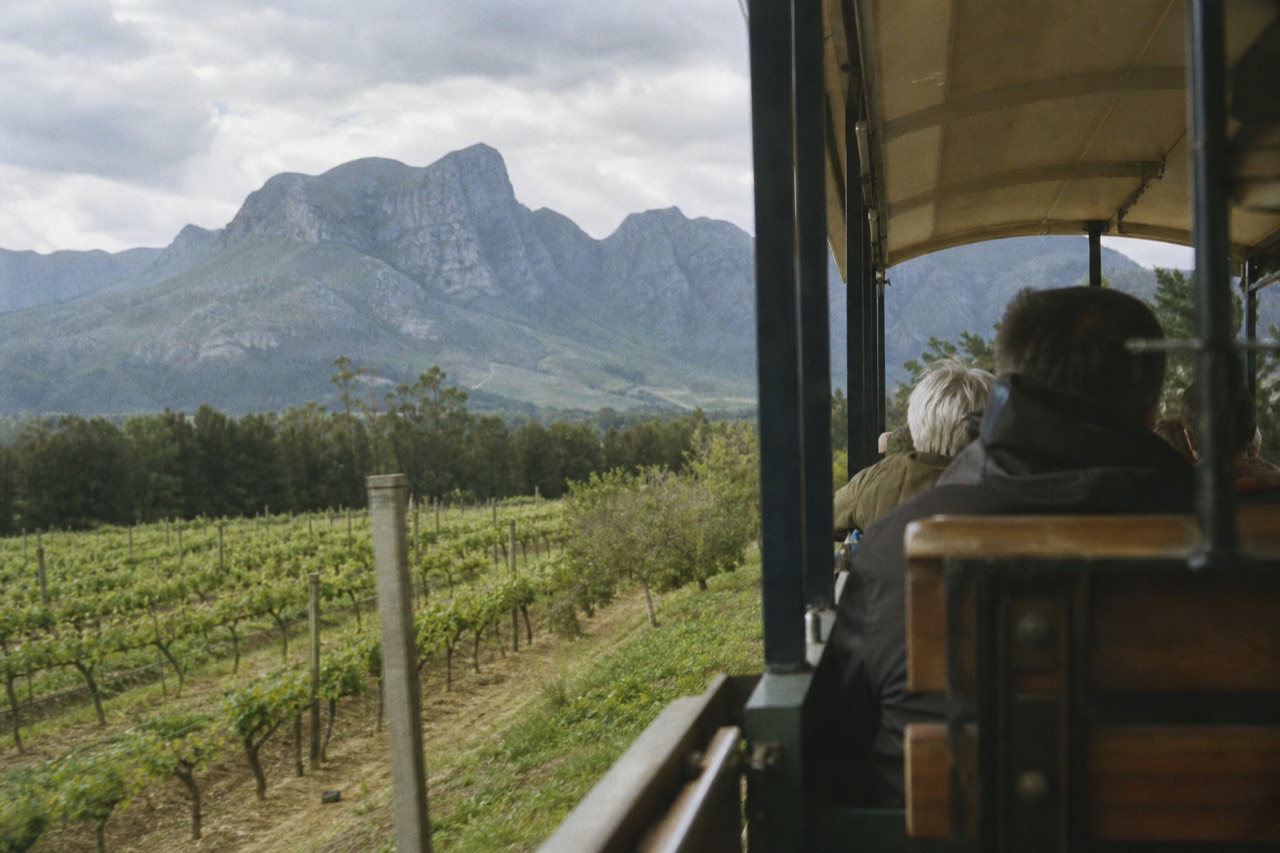
The Franschhoek Wine Tram is a hop-on-hop-off service that loops a fixed set of Franschhoek estates on eight colour-coded lines, mixing open tram sections with a tram-bus. You buy a day pass, ride the loop, and step off at whichever farms you like, paying each estate's tasting fee separately as you go. The tram runs its lines out of the village, and a single pass lets you cover four to six stops in a comfortable day if you keep moving. Peak-season weekends sell out, so the operator's own Franschhoek Wine Tram booking page is the place to lock a date rather than chancing a walk-up.
The appeal is obvious. You are not driving, the scenery between stops is the point rather than an inconvenience, and the pace is entirely yours. The catch is equally plain: the loop stays inside the Franschhoek valley, the tastings are not included in the pass, and a slow line on a busy day can eat an hour you meant to spend in a cellar.
A guided Winelands tour works from the other end. Instead of a fixed loop you get a driver, a small group, and a route that crosses valley boundaries: most full-day products run Cape Town to Stellenbosch, Franschhoek and Paarl in a single loop, with a tasting built in at each estate. The comparison below is not tram-good, tour-bad. It is one fixed valley at your own pace against three valleys someone else stitches together.
How much does the Franschhoek Wine Tram cost in 2026?
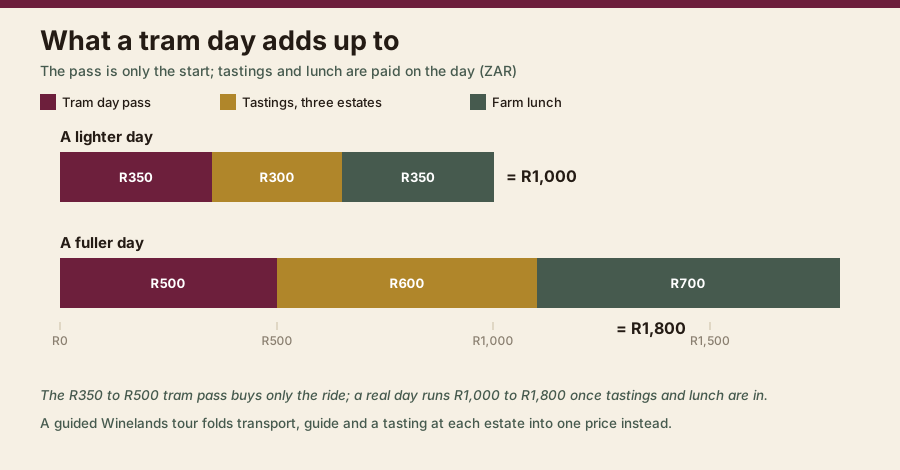
A Franschhoek Wine Tram day pass runs roughly R350 to R500 per adult depending on the line and season. Tastings are extra, usually R100 to R200 at each estate, and a full day of tram plus three tastings plus lunch typically lands between R1,000 and R1,800 per person once everything is added up. The headline pass price is the part people quote; the tastings and lunch are the part that catches them out. Board cheaply, then pay at every cellar door.
| Cost item | Typical 2026 amount | Included in the pass? |
|---|---|---|
| Tram day pass (per adult) | R350 to R500 | This is the pass |
| Tasting at each estate | R100 to R200 | No, paid on the day |
| Lunch at a farm restaurant | R250 to R600+ | No |
| Typical all-in day (tram + 3 tastings + lunch) | R1,000 to R1,800 | Adds up across the day |
A guided full-day tour prices differently. The seat covers transport, the guide and a tasting at each estate in one number, from about $56 to $57 per person on the classic Cape Town circuit, with lunch included on some products and paid separately on others. That is a genuinely different shape of spend: the tram starts cheap and grows through the day, while a tour asks for more up front and then stops surprising you. If you want the arithmetic laid out across both formats, the deeper breakdown lives in what a Winelands tasting day actually costs.
There is a cheaper floor than either, worth knowing before you decide. A hop-on wine tractor around Stellenbosch starts from about $25 for the seat, with tastings paid as you go, much like the tram's own pay-per-stop model. It is the closest thing Stellenbosch has to the tram's low-commitment entry, and it suits a budget-first day where you would rather spend the money on wine than on transport.
How does the tram compare to a guided Stellenbosch tour?
On a like-for-like day, the tram wins on pace and scenery inside one valley, while a guided tour wins on ground covered and on having nothing to organise. The tram keeps you in Franschhoek; a full-day tour reaches Stellenbosch, Franschhoek and Paarl. Choose the tram to linger, a tour to see more. Neither is objectively better. They are built for different appetites.
| Factor | Franschhoek Wine Tram | Guided Winelands tour |
|---|---|---|
| Area covered | Franschhoek valley only | Stellenbosch, Franschhoek and Paarl |
| Pace | Entirely yours, hop on and off | Set by the itinerary, roughly 3 to 4 estates |
| What the price covers | The ride; tastings and lunch extra | Transport, guide and a tasting at each estate |
| Getting there from Cape Town | Your own way to Franschhoek | Hotel pickup included |
| Planning effort | You choose stops and time them | None, the route is handled |
| Best for | Slow, self-directed valley days | Covering the region in one loop |
The honest split is about temperament. Some travellers love the freedom of a loop they control and will happily trade breadth for it. Others want to wake up, get collected, and let the day unfold without a single decision about which line runs when. A tour also solves the Cape Town problem for free: you do not need to reach Franschhoek yourself before the day even starts, which the tram quietly assumes you can.
Which covers more ground in a day, the tram or a Winelands tour?
A guided full-day tour covers noticeably more ground. It crosses three valleys, Stellenbosch, Franschhoek and Paarl, in a loop of roughly 8 to 8.5 hours. The tram, by design, stays inside Franschhoek: you see that one valley well, but you do not leave it. If your goal is variety of region in a single day, the tour is built for it. The tram trades reach for depth in one place.
Distance is the quiet factor here. The three Winelands towns are close on a map but not walkable between, and a fixed tram loop cannot bridge them.
| Route | Distance | Drive time |
|---|---|---|
| Cape Town to Stellenbosch | ~50 to 52 km | ~30 to 45 min |
| Stellenbosch to Franschhoek | ~30 to 35 km | ~30 to 40 min |
| Stellenbosch to Paarl | ~25 to 30 km | ~25 min |
| Franschhoek loop (tram lines) | Within the valley | Continuous hop-on service |
A guided day absorbs all of that driving into the seat price and the guide's route. You taste at an estate in Paarl, cross to Franschhoek for the next, and finish in Stellenbosch, or some order of that, without once checking a map. The tram cannot do this, and does not pretend to. Its whole promise is one valley, done slowly and well. If you would rather move between clusters of estates on your own timetable, the hop-on-hop-off passes around Stellenbosch are the closer local cousin to the tram than a full-day tour is.
Stellenbosch answers the tram with its own hop-on options, and they are the fairest local comparison. Each runs a fixed loop of estates you board and leave at will, with the tastings paid at the cellar door rather than bundled into the fare, which is the tram's own model carried across the mountains.
| Hop-on option | From price | How it runs | Tastings |
|---|---|---|---|
| Franschhoek Wine Tram | R350 to R500 pass | Fixed valley loop, 8 lines | Paid at each estate |
| Stellenbosch wine tractor | About $25 | Tractor-and-trailer loop | Paid as you go |
| Eastern route hop-on | About $29 | Driver day pass, eastern loop | Paid at each farm |
| Northern route hop-on | Price on the live listing | Shuttle, fixed northern loop | Paid at each farm |
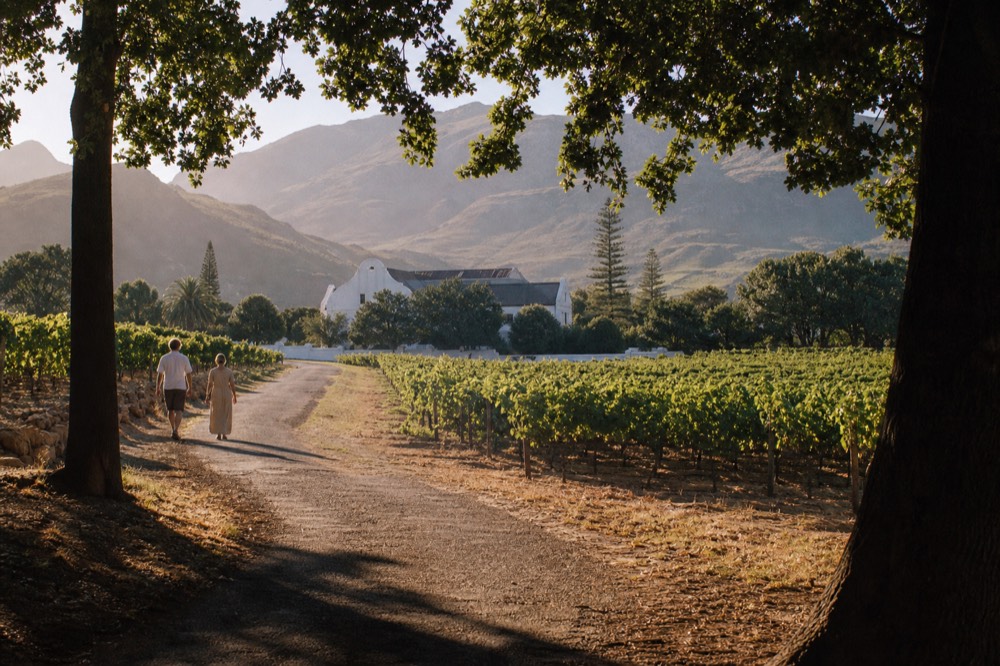
Is the tram easier than driving yourself between estates?
Both the tram and a guided tour beat self-driving on the one point that matters most: you can taste freely and let someone else handle the road. Self-driving forces one person to stay sober all day or gamble on the 0.05 limit. The tram and a tour both remove that trade entirely, which is the real reason either exists. After that, they differ on effort.
The tram still asks something of you. You reach Franschhoek under your own steam, you read the line schedules, you keep half an eye on the last service so you are not stranded, and you time your tastings so a slow carriage does not strand you between stops. None of that is hard, but it is planning. A guided tour asks for none of it: the collection time is the only thing you need to remember. For a Cape Town base with no car, that difference is larger than it sounds, and it is covered in full in the guide to Cape Town wine tasting day trips.
Some travellers should simply skip the tram, not because it is bad but because their day wants something the loop cannot give. If your trip has room for only one wine outing, or you are starting cold from Cape Town with no wheels, the tram's constraints outweigh its charm. The table below is the honest short list of when to look elsewhere.
| If you... | The tram is a poor fit because... | Better choice |
|---|---|---|
| Have only one wine day | One valley uses the whole day | A multi-valley guided tour |
| Are in Cape Town without a car | It will not collect you | A tour with hotel pickup |
| Want tastings in one price | You pay at every stop | An all-inclusive day |
| Are a group wanting your own route | The loop is fixed | A private day |
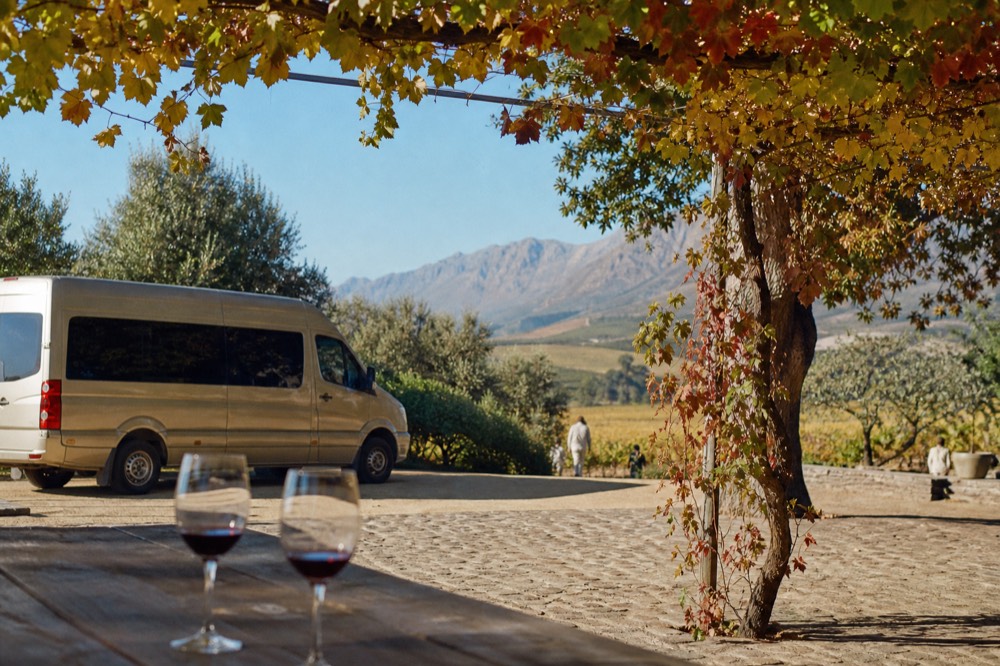
Franschhoek or Stellenbosch: which valley suits your day?
Franschhoek is the smaller, polished, French-heritage foodie village, tight enough that a tram loop makes sense and strong on fine dining. Stellenbosch is the larger, livelier historic university town with far more estates, more casual choices and better value for a first visit. The tram belongs to Franschhoek; Stellenbosch rewards a driver who can roam its wards. Your appetite decides.
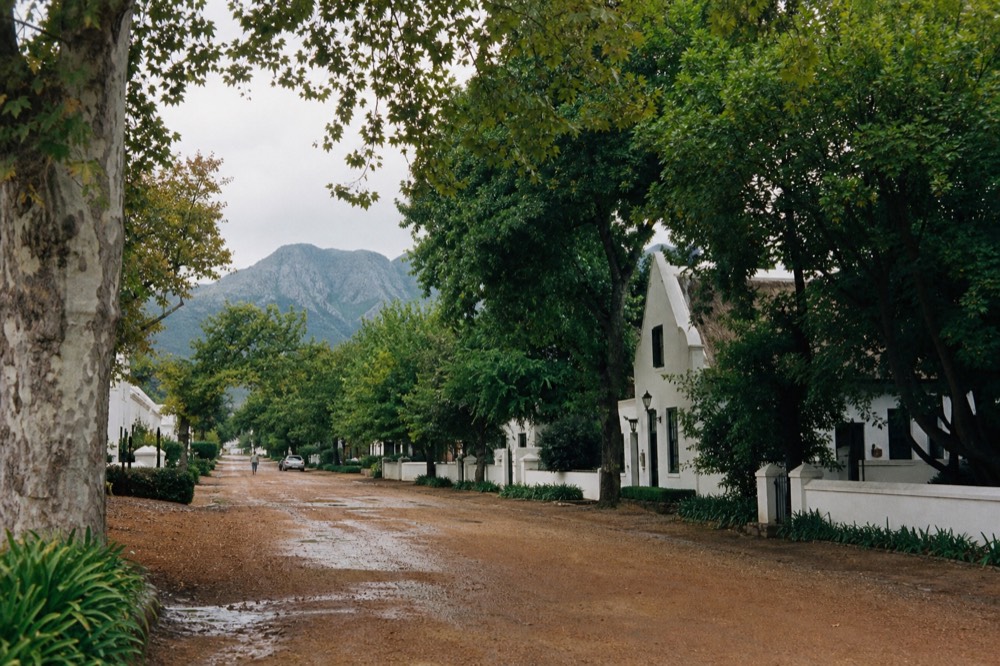
Travel writers keep drawing the same line between the two. Franschhoek reads as intimate and curated, a place that has leaned hard into being South Africa's food-and-wine capital, with top-end restaurants that book out weeks ahead in season. Stellenbosch reads as broader and more energetic: an oak-lined student town wrapped in eight official wine wards, with more cellar doors than any single day can hold and a wider spread of prices. If you are weighing the towns themselves rather than the transport, the full head-to-head sits in Stellenbosch or Franschhoek: which to visit.
The tram makes the most sense when Franschhoek is already your choice. If you are still deciding, or if you want more than one valley, the loop starts to feel like a constraint rather than a feature. That is exactly where a route that reaches the best Stellenbosch wine estates as well as Franschhoek pulls ahead.
When should you pick the tram, and when a tour?
Pick the tram when Franschhoek is your target, you want to set your own pace, and you can get yourself to the village. Pick a guided tour when you want more than one valley, you are based in Cape Town without a car, or you would rather not plan a single thing. Both keep you off the road after tasting, which is the point. The rest is style.
| You are... | Better fit | Why |
|---|---|---|
| Set on Franschhoek, slow and self-directed | The tram | One valley, your own pace, scenic loop |
| Based in Cape Town without a car | A guided tour | Hotel pickup, no logistics |
| Wanting to see several valleys in a day | A guided tour | Reaches Stellenbosch, Franschhoek and Paarl |
| A small group who want a set route your way | A private day | Own vehicle, own itinerary |
| Budget-first, happy to pay per tasting | The tram or a hop-on pass | Low entry cost, flexible tastings |
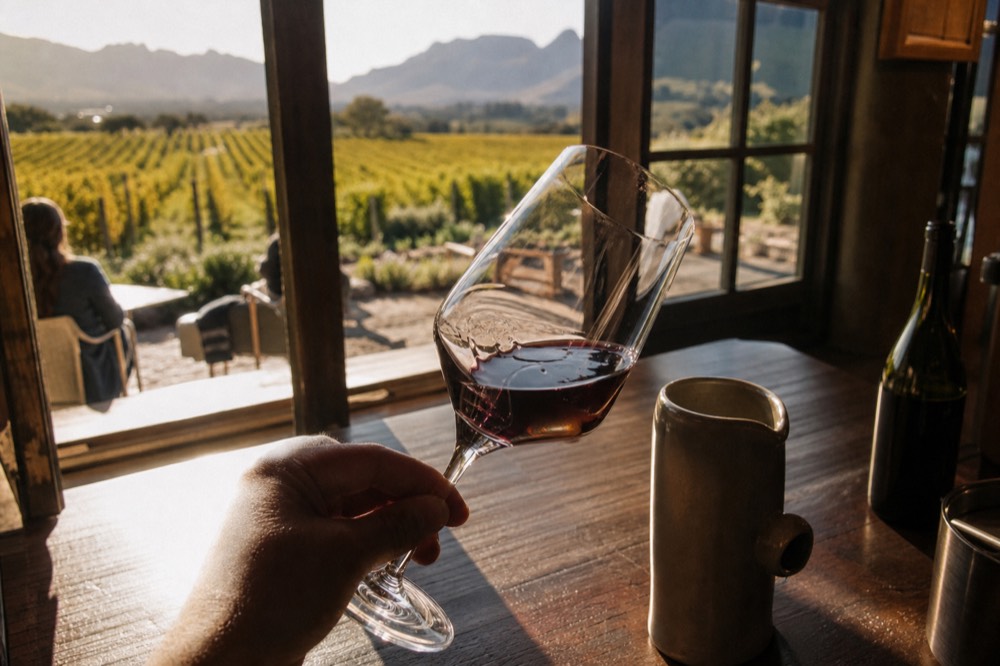
There is a version of this decision that has nothing to do with money. Some people simply enjoy the ritual of a tram, the between-stops views, the sense of an afternoon that belongs entirely to them. If that is you, the tram earns its keep even when a tour would technically show you more. If instead the idea of organising the Cape Town run, the line schedules and the tasting timings sounds like work rather than fun, that feeling is your answer. You can compare the seat prices and dates directly and check current dates and prices for the three-valley day, or look at the flexible check current dates and prices hop-on route if the tram's rhythm is what appealed to you in the first place.
For a plain-language verdict on the tram alone, before you weigh it against a tour, the blog on whether the Franschhoek Wine Tram is worth it walks through the same numbers in one sitting.
When is the best time to ride the tram or take a tour?
Both run year-round, but the season changes the day around them. Summer, roughly December to March, is warm, green and busiest, so book ahead. Winter, June to August, is cooler and quieter, with easier walk-ins and sometimes lower prices. Spring and autumn sit between, with flowering vines or harvest activity and gentler crowds. The wine is good in every season. Timing shifts the crowd, not the quality.
Harvest, from late January into April, is the one window with a distinct character. Estates are busy bringing in fruit, the cellars smell of fermentation, and some farms run harvest-themed experiences, though the popular ones fill fast. If you want the valleys at their calmest, aim for winter: the light turns low and soft, the crowds thin, and a walk-in tasting that would be impossible on a summer Saturday becomes easy. The trade is weather, since a Cape winter brings real rain and a booked tram carriage suddenly looks smart. Whichever season you pick, the argument for a driver holds, because a wet road after a tasting flight is exactly what a guided day removes.
| Season | Months | What to expect | Booking |
|---|---|---|---|
| Summer / high | Dec to Feb/Mar | Warm, scenic, busiest | Book well ahead |
| Harvest | Late Jan to April | Cellar activity, warm days | Book ahead |
| Winter / quiet | Jun to Aug | Cooler, rainier, fewer crowds | Easier walk-ins |
| Spring / shoulder | Sep to Nov | Flowering vines, mild, manageable | Moderate |
Common questions
Is the Franschhoek Wine Tram better than a stellenbosch wine tours day out of Cape Town?
Neither is strictly better. The tram is a self-paced loop inside the Franschhoek valley with a low entry price and tastings paid per stop. A guided Cape Town day covers Stellenbosch, Franschhoek and Paarl with transport and tastings handled. Choose the tram to linger in one valley, a tour to see more with no planning.
How much should I budget for a full day on the tram?
Plan for roughly R1,000 to R1,800 per person once you add the R350 to R500 day pass, tastings of R100 to R200 at each estate, and lunch. The pass alone looks cheap, but the per-estate fees and a farm lunch are where the real spend sits.
Do I still need transport to reach the tram?
Yes. The tram loops estates inside Franschhoek, but it does not collect you from Cape Town. You reach the village on your own, which usually means a hire car, a transfer or a shuttle. A guided full-day tour includes hotel pickup, so it removes that step entirely.
Can a guided tour visit the same estates the tram serves?
A full-day tour typically visits three to four estates across Stellenbosch, Franschhoek and Paarl, chosen by the operator, rather than the specific farms on a tram line. Frame the choice by format and region rather than by a promise of any one named estate, since itineraries vary by operator and date.
Which is safer after a day of tasting?
Both are safe on the point that matters, because someone else handles the driving in each case. South Africa's limit is 0.05, a tasting flight climbs past it quickly, and there is no reliable way to judge your own level. The tram and a guided tour both let you taste freely and leave the road to someone else.