Is Stellenbosch Worth Visiting?
Is Stellenbosch worth visiting? Yes, for South Africa's oldest wine region, a historic town and mountains, all under an hour from Cape Town.
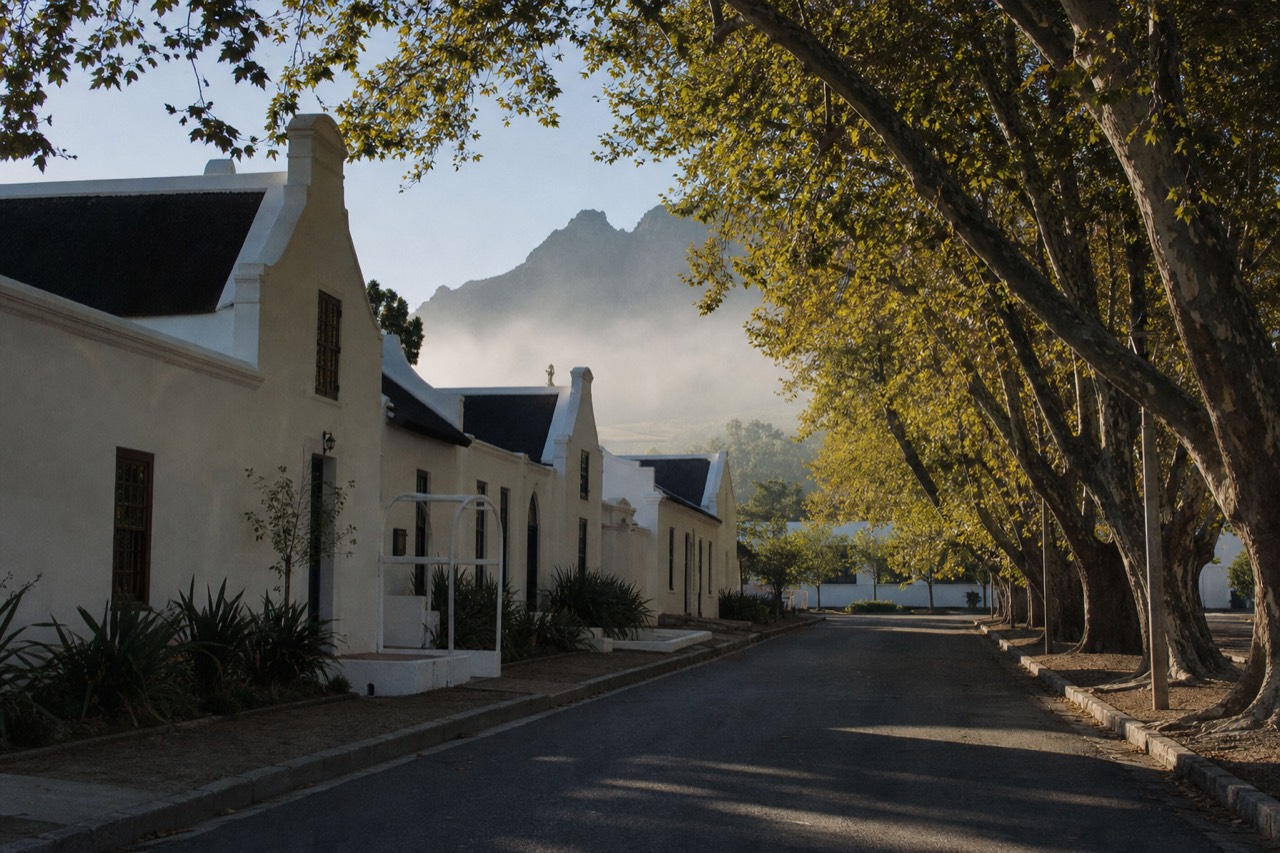
Plenty of visitors treat Stellenbosch as a half-day detour from Cape Town, taste at one farm, and leave wondering if they missed something. They did. The town is South Africa's second-oldest European settlement, the birthplace of its wine industry, and the seat of one of its best universities, all wrapped in oak-lined streets you can walk in twenty minutes, the same mix that answers what the town is actually famous for. Add a restaurant scene that collects national awards and mountains at the end of the road, and the case for staying longer makes itself.
Is Stellenbosch worth visiting?
Yes, for most travellers. Stellenbosch pairs South Africa's oldest and most decorated wine region with a historic, walkable town, a nationally ranked food scene and easy access to mountains and reserves. It sits about fifty kilometres from Cape Town, close enough for a day trip and rewarding enough for an overnight stay. It suits wine, food and history lovers far more than beach or nightlife seekers.
The short answer holds up under scrutiny because Stellenbosch does several things at once, and does them well. It is not a one-note wine stop. The historic town centre works on its own for a morning, the estates fill an afternoon, and the food alone justifies a trip for some visitors. What tips most people toward "worth it" is the combination: few places let you walk a 350-year-old street, eat at a two-star restaurant and taste world-ranked wine within a few kilometres. The main catch is logistics, since the farms are dispersed and need a driver, but that is a solvable problem rather than a reason to stay away.
| The draw | What it delivers | Who it suits most |
|---|---|---|
| Wine | Oldest region, first wine route, 150-plus farms | First-time winelands visitors |
| Food | Two estate restaurants with two Eat Out stars | Serious food travellers |
| Historic town | Oak-lined Cape Dutch streets, museums | History and architecture lovers |
| Mountains and reserves | Jonkershoek hiking and trail riding | Outdoor and active visitors |
| Proximity to Cape Town | About 50 km, under an hour by road | Day trippers short on time |
What makes Stellenbosch worth the trip?
Four things carry it: the wine, the food, the town and the outdoors. Stellenbosch is South Africa's oldest wine region and holds its first wine route, founded in 1971. Its estate restaurants are among the country's best. The historic core is compact and walkable. And the Jonkershoek mountains put real hiking minutes from the tasting rooms. Together they make a fuller day than the wine alone.
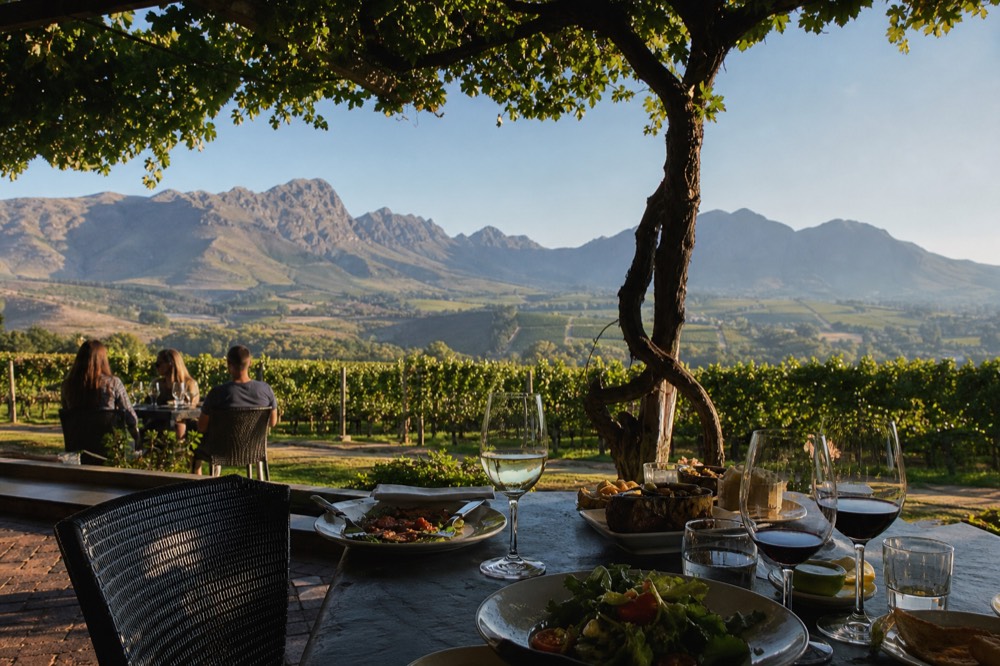
Start with the wine, because it is the reason the town is on the map. The Stellenbosch Wine Route is the country's oldest, and the district packs more award-winning estates into one valley than anywhere else in the Cape. The food matches it: the Jordan Restaurant with Marthinus Ferreira and Rust en Vrede each hold two stars in the 2026 Eat Out awards, a rare density of top kitchens for a small town. Then there is the town itself, all gabled facades and oaks, easy to cross on foot and full of small museums, which the guide to things to do in Stellenbosch covers in full. For anyone who wants to move, Jonkershoek and the town reserves add a genuine outdoor layer that Franschhoek and Paarl cannot quite match. A guided vineyard walk with tastings is another way to spend an active afternoon on foot among the vines rather than in a van.
Is Stellenbosch worth visiting as a day trip from Cape Town?
Yes. Stellenbosch sits about fifty kilometres from Cape Town, roughly thirty to forty-five minutes by road, which makes it one of the easiest day trips from the city. A guided full-day tour handles the driving and visits three or four estates; a shuttle or private transfer gets you to town if you would rather explore on foot. The one thing to solve is who drives between the dispersed farms.
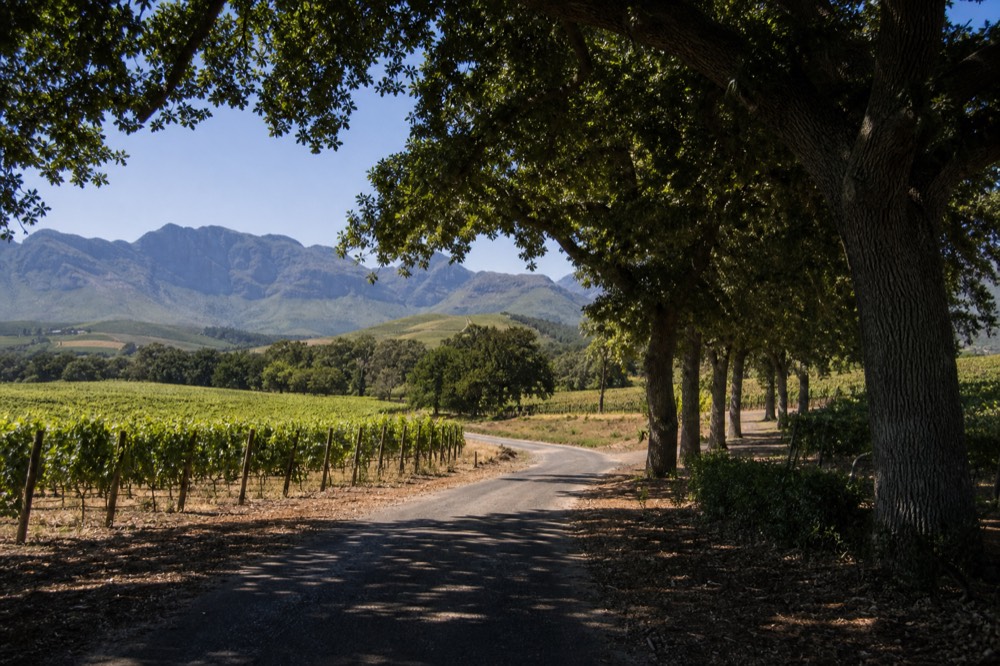
The distance is the day trip's best friend. You can leave a Cape Town hotel mid-morning and be tasting in the vineyards within the hour, which is why so many visitors do Stellenbosch without ever changing accommodation. The catch is the same one that shapes every winelands day: the estates are spread across the valleys on winding roads, and South Africa's drink-driving limit is 0.05 grams per 100 millilitres, so someone has to stay sober if you self-drive. A guided day removes that entirely. The full-day tour from Cape Town picks the estates and does the driving, and you can check current dates and prices against a lighter half-day out of the city to match your schedule. Trains run from Cape Town too, but take over two hours, so most visitors use a tour, a shuttle or a ride app instead.
| Getting there | Time | Rough cost | Note |
|---|---|---|---|
| Guided day tour | About 8 hours | From around $56 | Driving and estates handled |
| Half-day tour | About 5 hours | From around $55 | A lighter first taste |
| Scheduled shuttle | 25-55 min | About $24-$38 | Town drop-off, explore on foot |
| Private transfer | 30-45 min | Sedan from about $51 | Door to door |
| Train from Cape Town | Over 2 hours | Low fare | Slow, daytime only |
Who might not enjoy Stellenbosch?
Stellenbosch is not for everyone. Travellers chasing beaches, big-city nightlife or non-stop activity will find it quiet and wine-centred. Visitors who do not drink and have no interest in food or history get less from it, though the town and mountains still hold something. And anyone unwilling to arrange transport for the dispersed farms may feel stuck, since the estates are not walkable from town.
Honesty helps here, because a mismatched visit sours the whole thing. This is a slow, scenic, wine-and-food town, not a party destination or a coastal resort. If your ideal trip is surf and clubs, Cape Town itself serves you better, with Stellenbosch as an easy day out rather than a base. Non-drinkers are not shut out, since the historic core, the museums, the reserves and the estate gardens all work without a glass, but they should weigh whether a wine district is the right centre of a trip. And the transport point is real: without a car, a driver, a hop-on pass or a tour, you will see the town but little of the wider valley. Weigh it against Stellenbosch versus Franschhoek if you are still choosing a base.
Is it worth staying overnight, or just visiting for the day?
Both work. A day trip from Cape Town suits a first taste, covering the town and a few estates in eight hours. An overnight stay earns its keep if you want unhurried tastings, dinner at an estate restaurant that needs a booking, and a morning in the mountains before the crowds. Staying also solves the driver problem, since you can walk the town and tour the farms on separate days.
The choice comes down to pace and food. If you only want a sampler, the day trip does the job and keeps your base in the city. If the point of the trip is a long lunch on a vineyard terrace, an evening tasting menu and a slow second day, an overnight in or near the town pays off, a question the piece on is it worth staying over in Stellenbosch walks through in more detail, and the overnight-in-the-vines options put you within reach of both. Staying also lets you split the driving problem cleanly, walking the historic streets one day and taking a guided or private farm day the next. Either way, a light vineyard walk with tastings is an easy add for an afternoon, and you can check current dates and prices if you want a shorter, gentler introduction first.
Common questions
Is Stellenbosch worth visiting?
For most travellers, yes. It is South Africa's oldest wine region, home to the country's first wine route, one of its best restaurant scenes and a walkable historic town, all under an hour from Cape Town. It suits wine, food and history lovers most, and beach or nightlife seekers least.
How long should you spend in Stellenbosch?
A day covers the town and a few estates if you keep moving. Two days let you split the historic core and the wine farms without rushing, and add a morning in the mountains. Food-focused visitors often stay overnight to book an estate restaurant that needs advance reservation.
Is Stellenbosch better than Franschhoek?
They are different rather than ranked. Stellenbosch has more estates, stronger reds, a bigger town and real mountains for hiking; Franschhoek is smaller, more French in feel and food-led, with its hop-on tram. Many visitors see both on one winelands day rather than choosing between them.
Can you visit Stellenbosch without drinking wine?
Yes. The historic streets, the museums, the University Botanical Garden and the Jonkershoek and town reserves all work with no tasting involved, and several estates keep gardens and delis worth a visit for the setting alone. Non-drinkers get plenty from the town, though the wine is its main draw.
Do you need a car to visit Stellenbosch?
Not for the town, which is walkable, but yes for the wider valley. The wine estates are dispersed on country roads and not walkable, so you need a car, a hired driver, a hop-on pass or a guided tour to reach them. A tour also removes the drink-driving problem entirely.