What Is the Best Wine from Stellenbosch?
The best wine from Stellenbosch, grape by grape: age-worthy Cabernet, the region's own Pinotage and a Chenin Blanc revival, with the estates and awards.
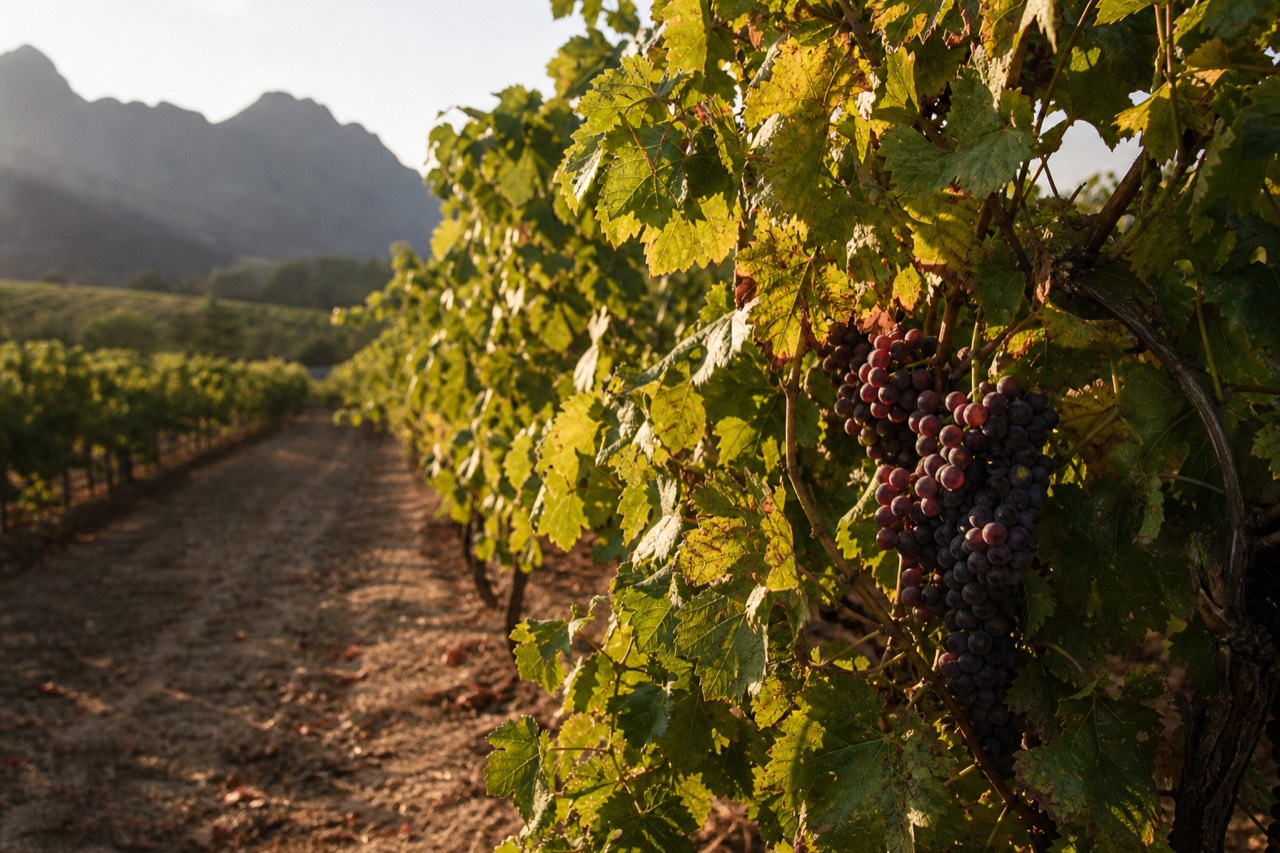
The grape that made Stellenbosch famous was invented here. Pinotage was bred on a university farm in the town in 1925, and it still carries the region's name around the world. But ask a serious taster for the best wine from Stellenbosch and Cabernet Sauvignon comes up first, with the red blends close behind and a reviving white in the wings. The answer depends on what you drink, so it pays to take the grapes one at a time.
What is the best wine from Stellenbosch?
Stellenbosch's best wines are its reds: age-worthy Cabernet Sauvignon, Bordeaux-style blends, and Pinotage, the cross bred in the town in 1925. Chenin Blanc leads the whites and is climbing fast. Kanonkop, Rust en Vrede, Warwick and Tokara pour many of the labels that top the country's competitions, so a first tasting is best built around reds.
No single bottle wins outright, because the region's strength is range within a red-first identity. In the 2026 National Wine Challenge Top 100, Stellenbosch secured eighteen winning red wines, more than any other region, and it dominated several red categories. The table below sorts the strengths by grape, which is the most useful way to plan what to taste.
| Grape or style | Why Stellenbosch does it well | Estates known for it |
|---|---|---|
| Cabernet Sauvignon | Granite and shale soils plus sea-cooled air give structure and ageing | Kanonkop, Rustenberg, Thelema |
| Bordeaux-style blends | The region's calling card, built to age | Kanonkop (Paul Sauer), Warwick (Trilogy) |
| Pinotage | Born here in 1925, from bright to deep and serious | Kanonkop, Warwick, Simonsig |
| Syrah / Shiraz | Warmer sites and a First Growth name | Rust en Vrede, Hartenberg |
| Chenin Blanc | Old-vine revival, fresh and mineral | Old-vine specialists, Spier |
| Chardonnay | Cool high sites on the Helshoogte Pass | Jordan, Tokara, Rustenberg |
Why is Stellenbosch Cabernet Sauvignon so highly rated?
Stellenbosch Cabernet is prized for structure and ageing. Decomposed granite, shale and sandstone soils, paired with cooling breezes off False Bay, slow the ripening and build firm, long-lived reds. The region's estates were bottling single-varietal Cabernet as early as the 1960s, and the grape remains its most awarded.
The pedigree is old. Alto released a single-varietal Cabernet in 1965, followed by Rustenberg in 1971 and Kanonkop in 1973, once the 1972 Wine of Origin rules gave estate labels real meaning. That head start shows: the 2026 IWSC results brought Stellenbosch multiple Cabernet golds, and the same soils feed the Bordeaux-style blends that carry the region's reputation. For the wider quality picture, the honest answer on whether Stellenbosch wine is good sets the awards in context, and the ranked best wine farms in Stellenbosch shows where to taste them.
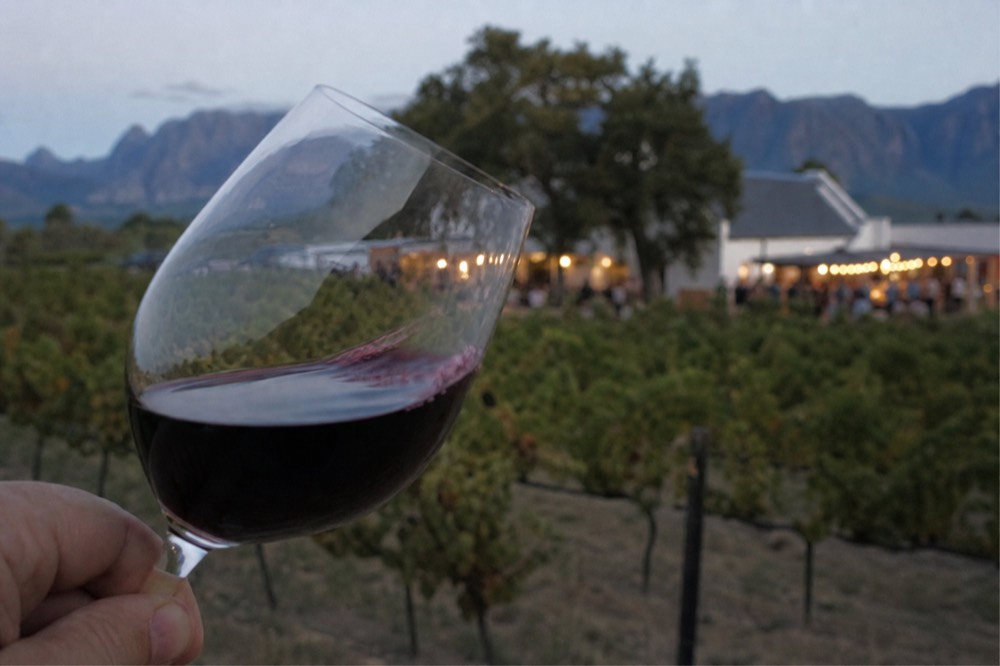
Is Pinotage really Stellenbosch's signature wine?
Yes. Pinotage is a South African cross of Pinot Noir and Cinsaut, bred by Professor Abraham Perold at Stellenbosch University's Welgevallen farm in 1925 and noted in his diary the year before. It celebrated its centenary in 2025. Stellenbosch estates still set the benchmark, from bright and juicy styles to serious, age-worthy bottlings.
The grape had a rocky reputation for decades before a wave of careful winemaking rehabilitated it. Today Pinotage is treated as a flagship rather than a curiosity, and Stellenbosch names lead the field: Warwick's Black Lady Pinotage 2023 was among the winners of the 2025 Absa Top 10 competition, and Tokara took Pinotage of the Year in the Cape's leading 2026 guide. The full story of the grape sits alongside the oldest cellars in the valley, and the named-estate questions people ask about Warwick, Thelema and Tokara turn on exactly these wines.
What about Chenin Blanc and the white wines?
Chenin Blanc is Stellenbosch's rising white, driven by old-vine vineyards and a revival that began in the early 2000s. Chardonnay from cool Helshoogte sites is the other benchmark. In 2026 a Stellenbosch Chenin Blanc won South Africa's sole Best in Show at the Decanter World Wine Awards, the strongest possible signal that the whites now travel with the reds.
The Old Vine Project, founded in 2002, certifies vineyards over thirty-five years old and has pushed Chenin quality upward across the Cape, with Stellenbosch heritage plantings at the centre. Spier's Johan Jordaan was named Master Chenin Blanc Winemaker for a second straight year in 2026. That Decanter Best in Show for a Stellenbosch Chenin, plus Jordan and Tokara Chardonnays that sit among the country's best, means a tasting no longer has to be red to be worthwhile. Pair a few whites with cheese on a chocolate, cheese and wine day and the range shows.
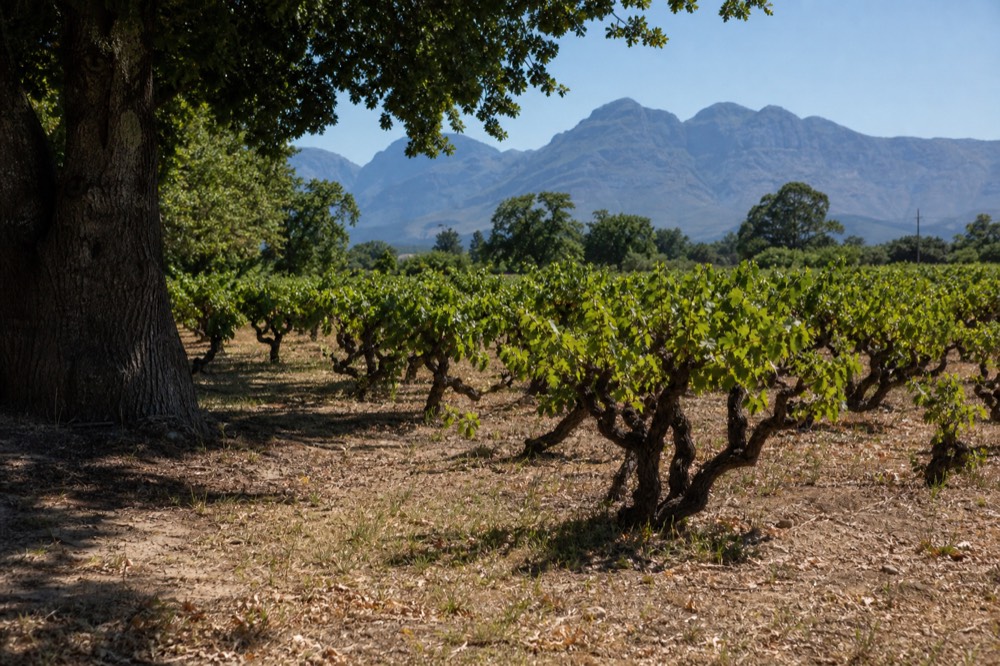
Which Stellenbosch wines and estates should you taste?
To taste the region's best in a day, aim for a Cabernet and a Pinotage at Kanonkop, a Bordeaux-style blend such as Warwick's Trilogy, a red-only flight at Rust en Vrede, a Chardonnay at Jordan or Tokara, and an old-vine Chenin where you can find one. A guided day links several estates so you sample across grapes without driving.
Building that spread on your own means four or five cellar doors, tasting fees at each, and a sober driver for the whole loop. The arithmetic is set out in the guide to what a tasting day actually costs. A single booking that pours fifteen wines across three estates skips the sums, and you can check current dates and prices for it, or read whether a guided day earns its price first.
If you would rather taste on foot among the vines than hop between cellars, a guided vineyard walk with more than eight tastings covers a lot of ground slowly. You can check current dates and prices for it beside the full-day tours on the homepage.
Taste across a Cabernet, a Pinotage and an old-vine Chenin in one sitting, and the region's range makes its own argument.
Common questions
What wine is Stellenbosch famous for?
Red wine above all: Cabernet Sauvignon and Bordeaux-style blends, and Pinotage, the grape bred in the town in 1925. Stellenbosch also makes benchmark Chardonnay and a fast-rising Chenin Blanc. Its reds win more of the country's top awards than any other region.
What is Pinotage and why is it linked to Stellenbosch?
Pinotage is a South African cross of Pinot Noir and Cinsaut, created by Professor Abraham Perold at Stellenbosch University in 1925. The grape was born in the town and its best examples still come from Stellenbosch estates, which is why the two names are so closely tied.
Is Stellenbosch Cabernet worth buying?
Many tasters think so. The region's granite and shale soils and sea-cooled air build structured, age-worthy Cabernet, and Stellenbosch took multiple Cabernet golds at the 2026 IWSC. Kanonkop, Rustenberg and Thelema are reliable names if you want a bottle to keep.
Does Stellenbosch make good white wine?
Increasingly, yes. A Stellenbosch Chenin Blanc won South Africa's sole Best in Show at the 2026 Decanter World Wine Awards, and Jordan and Tokara Chardonnays rank among the country's best. Old-vine Chenin is the white to seek out on a tasting.
Where can I taste the best Stellenbosch wines?
Kanonkop for Pinotage and Cabernet, Rust en Vrede for reds only, Warwick for blends, and Jordan or Tokara for Chardonnay. A guided day links several estates in one trip, so you taste across grapes without hiring a car or nominating a driver.